
Licensed Florida Contractor
FL License #EC13016138 identifies the contracting license presented by Data Pro Communications.
SECURITY SYSTEM SELECTION FRAMEWORK
There is no single “best” security system for every Orlando property. A medical office protecting controlled doors, a warehouse monitoring docks and a retail site reviewing transactions need different combinations of video, access control, intercom, network capacity and operating procedures.
FL License #EC13016138 identifies the contracting license presented by Data Pro Communications.
List entrances, restricted rooms, public areas, vehicle zones and the incidents the team needs to prevent, verify or investigate.
Unused alerts and unmanaged accounts reduce effectiveness.
Maintenance, licensing, storage growth and replacement planning.
PROJECT GUIDANCE
The best fit is the smallest coherent system that covers the property’s defined risks, gives authorized staff usable evidence and access control, and can be maintained within the organization’s technical capacity. Begin with events and responsibilities, then choose components.
CAPABILITIES
List entrances, restricted rooms, public areas, vehicle zones and the incidents the team needs to prevent, verify or investigate.
Decide where overview, identification, transaction context or specialty capture is required.
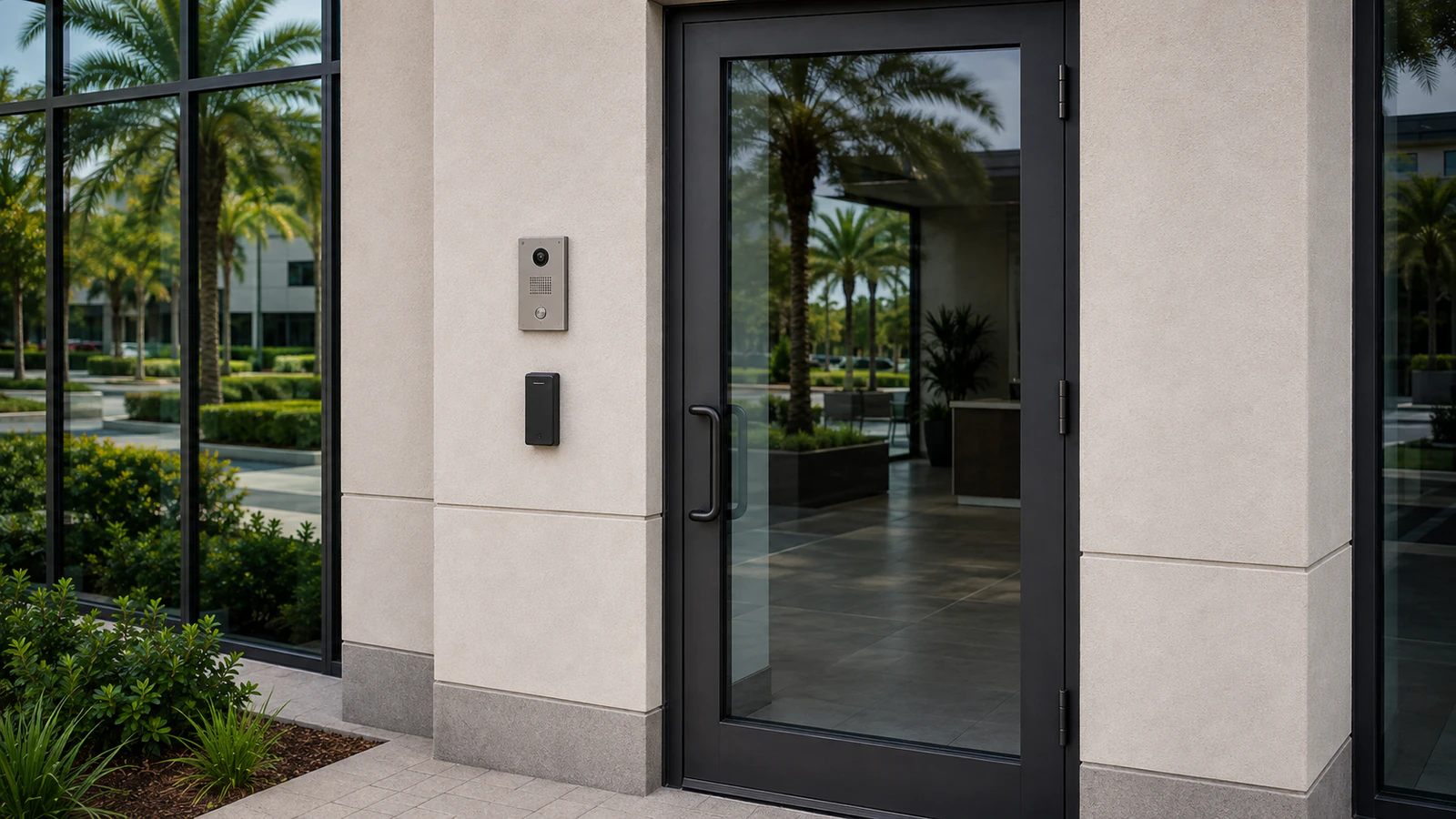
Identify credentials, schedules, release methods, intercom calls and emergency procedures for controlled entries.
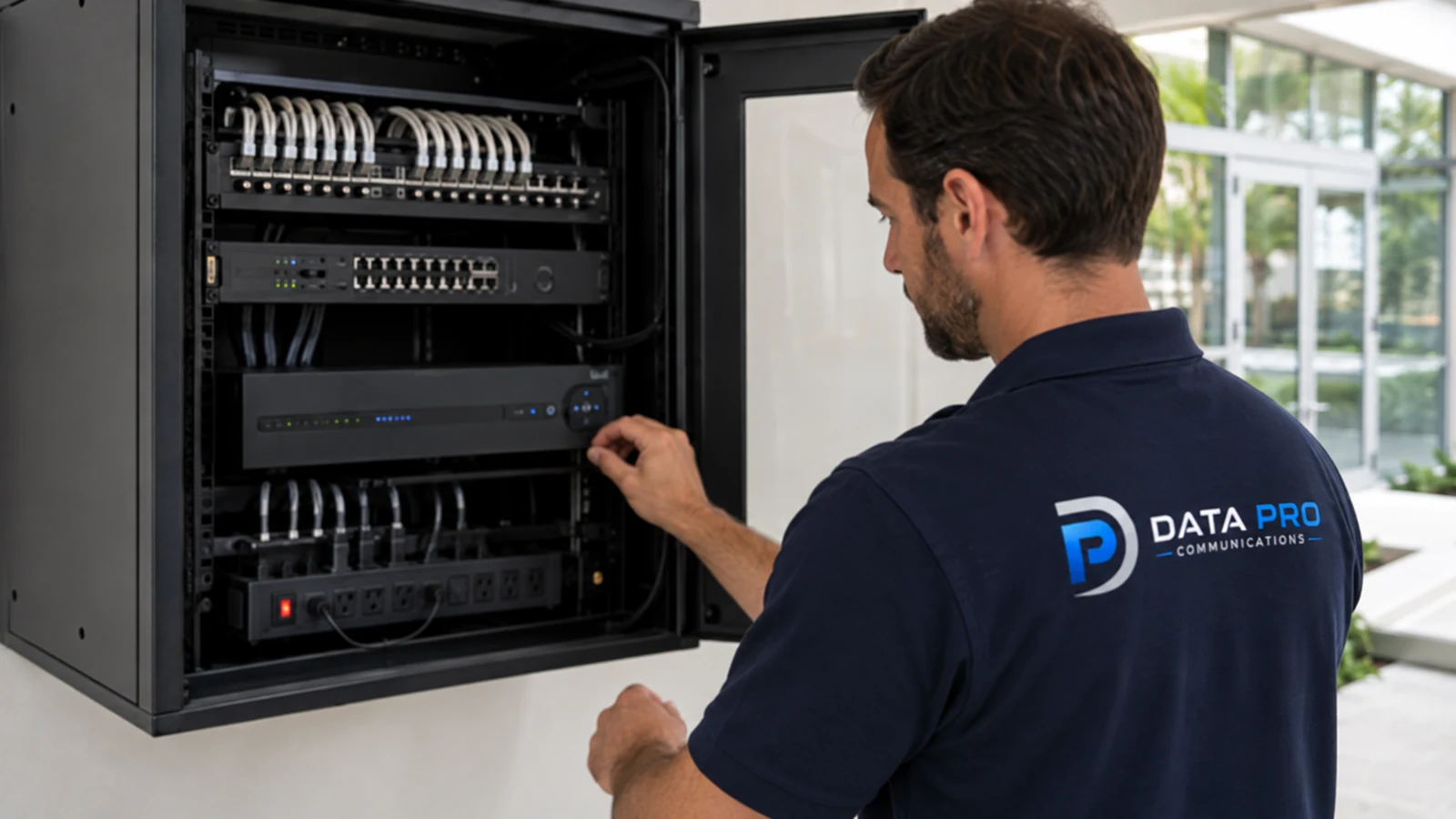
Match device traffic, PoE, storage, retention and remote access to customer IT policy.
Assign account owners, credential issuers, evidence custodians and service contacts.
Favor supported platforms and documented configurations the organization can test, update and repair over time.
EAST ORLANDO CONTEXT
East Orlando professional offices, warehouses and managed properties do not share one security-system priority. The useful mix follows the property’s doors, vehicle areas, evidence needs, staffing and ability to administer the platform.
PROJECT GUIDANCE
List entrances, restricted rooms, public areas, vehicle zones and the incidents the team needs to prevent, verify or investigate.
Decide where overview, identification, transaction context or specialty capture is required.
Identify credentials, schedules, release methods, intercom calls and emergency procedures for controlled entries.
Match device traffic, PoE, storage, retention and remote access to customer IT policy.
Assign account owners, credential issuers, evidence custodians and service contacts.
Favor supported platforms and documented configurations the organization can test, update and repair over time.
PROPERTY APPLICATIONS
Controlled staff doors, a visitor intercom and entrance video may matter more than broad perimeter analytics.
Dock views, yard coverage, gate events and durable cabling can outweigh polished lobby features.
Central administration, delegated permissions and reliable inter-building links become major selection criteria.
PROJECT PROCESS
Fund the views and controls that address the most important operational risks first.
Decide whether facilities, IT, security or a managed partner controls accounts and changes.
Test analytics, mobile workflows or difficult radio links before making them portfolio standards.
PLANNING RISKS
Unused alerts and unmanaged accounts reduce effectiveness.
Shared dashboards do not guarantee full event exchange or unified permissions.
Staff still need procedures for alarms, visitors, evidence and credential changes.
PLANNING RISKS
The package may not match the property’s views, doors or network.
Excess notifications can hide the events that matter.
Licenses, storage, batteries, software support and service access continue after installation.
TECHNICAL PLANNING
Defined incidents, areas and response expectations.
Pathways, power, network and telecom spaces.
Accounts, credentials, evidence and vendor access.
Maintenance, licensing, storage growth and replacement planning.
PROJECT GUIDANCE
RELATED PATHS

PROJECT PROCESS
List entrances, restricted rooms, public areas, vehicle zones and the incidents the team needs to prevent, verify or investigate.
Decide where overview, identification, transaction context or specialty capture is required.
Defined incidents, areas and response expectations.
Test analytics, mobile workflows or difficult radio links before making them portfolio standards.
FAQ
No. Property conditions, required events, integrations, support and administration matter more than a universal brand ranking.
Start with risks and operating events, then determine whether video, controlled entry, intercom or another response best addresses each one.
Integration is useful when door events need associated video or a shared workflow, provided the exact platforms support the required exchange.
Choose retention from investigation timelines, policy and risk, then confirm storage under realistic stream settings.
Yes when devices use the network, PoE, identity services, remote access or cybersecurity policy.
Consistent naming, delegated permissions, reliable connectivity, documented standards and centralized health monitoring improve manageability.
No. Analytics should address specific review tasks and be tuned so staff can act on the resulting events.
Define who answers calls, verifies visitors, releases doors, records events and handles after-hours exceptions.
Include licensing, storage, batteries, software support, cleaning, repairs, network changes and administrator time.
Compare coverage objectives, responsibilities, infrastructure, supported workflows, acceptance tests and lifecycle terms on the same basis.
The best security system is not the one with the longest feature list. It is the one whose cameras, doors, communications and infrastructure support a clear operating model that the property can sustain.