
Licensed Florida Contractor
FL License #EC13016138 identifies the contracting license presented by Data Pro Communications.
PRE-INSTALLATION RISK REVIEW
Most CCTV problems are visible before installation if the team asks the right questions. Glare, blocked pathways, weak mounting surfaces, insufficient PoE, unclear retention, inaccessible accounts and privacy-sensitive views can all change the design before labor is scheduled.
FL License #EC13016138 identifies the contracting license presented by Data Pro Communications.
Frame entrances and property areas carefully, and obtain appropriate legal or policy review for sensitive locations or audio features.
Hidden conditions still require qualified inspection.
User permissions, retention, export and incident response.
PROJECT GUIDANCE
Resolve objectives, scene constraints, infrastructure capacity and operating ownership before approving the device list. This is a risk review, not an installation sequence: its purpose is to expose conditions that could change cost, coverage, compliance review or long-term support.
CAPABILITIES
Frame entrances and property areas carefully, and obtain appropriate legal or policy review for sensitive locations or audio features.
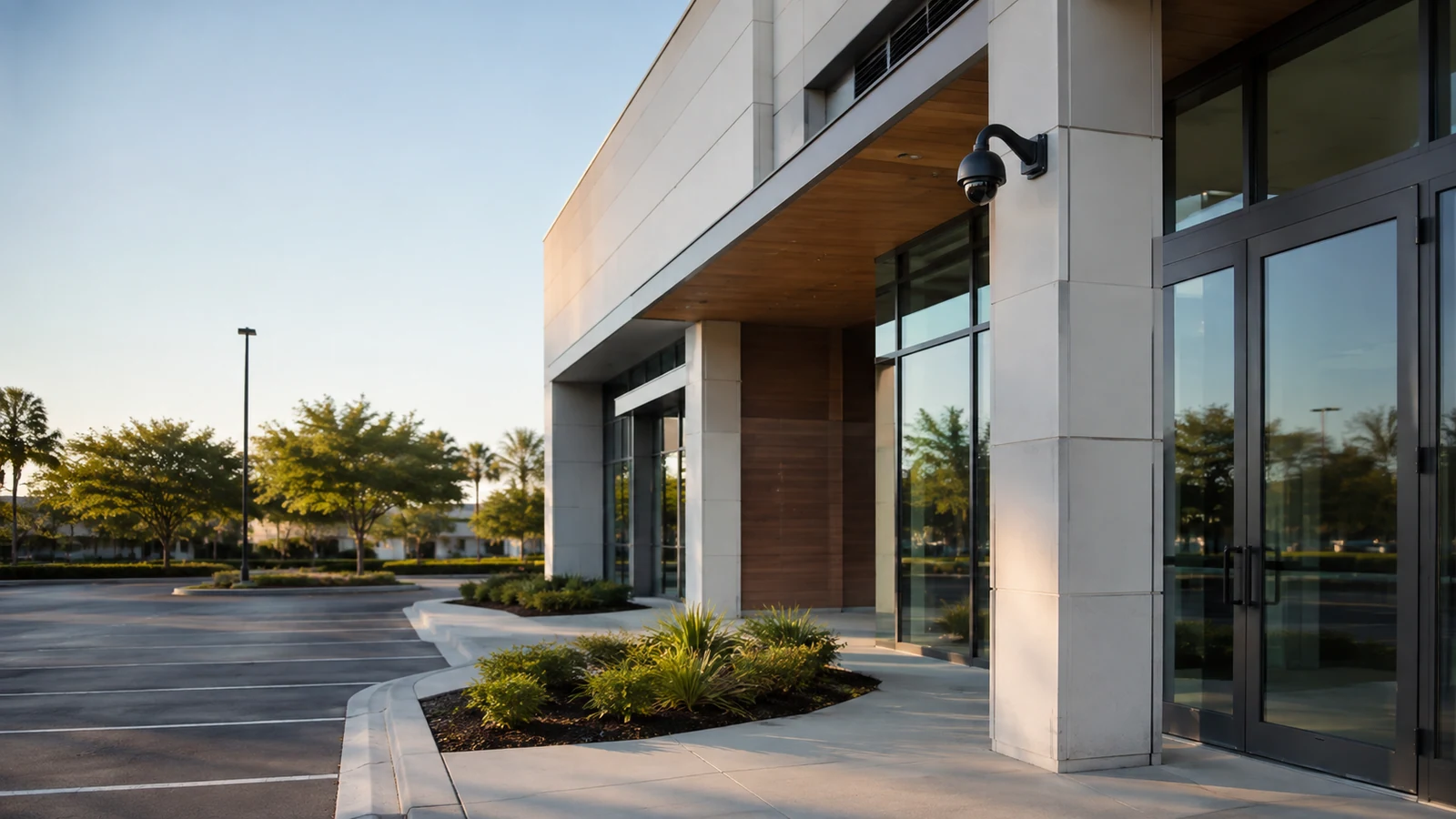
Backlit doors, headlights, reflective floors and dark exteriors may require different placement or illumination.
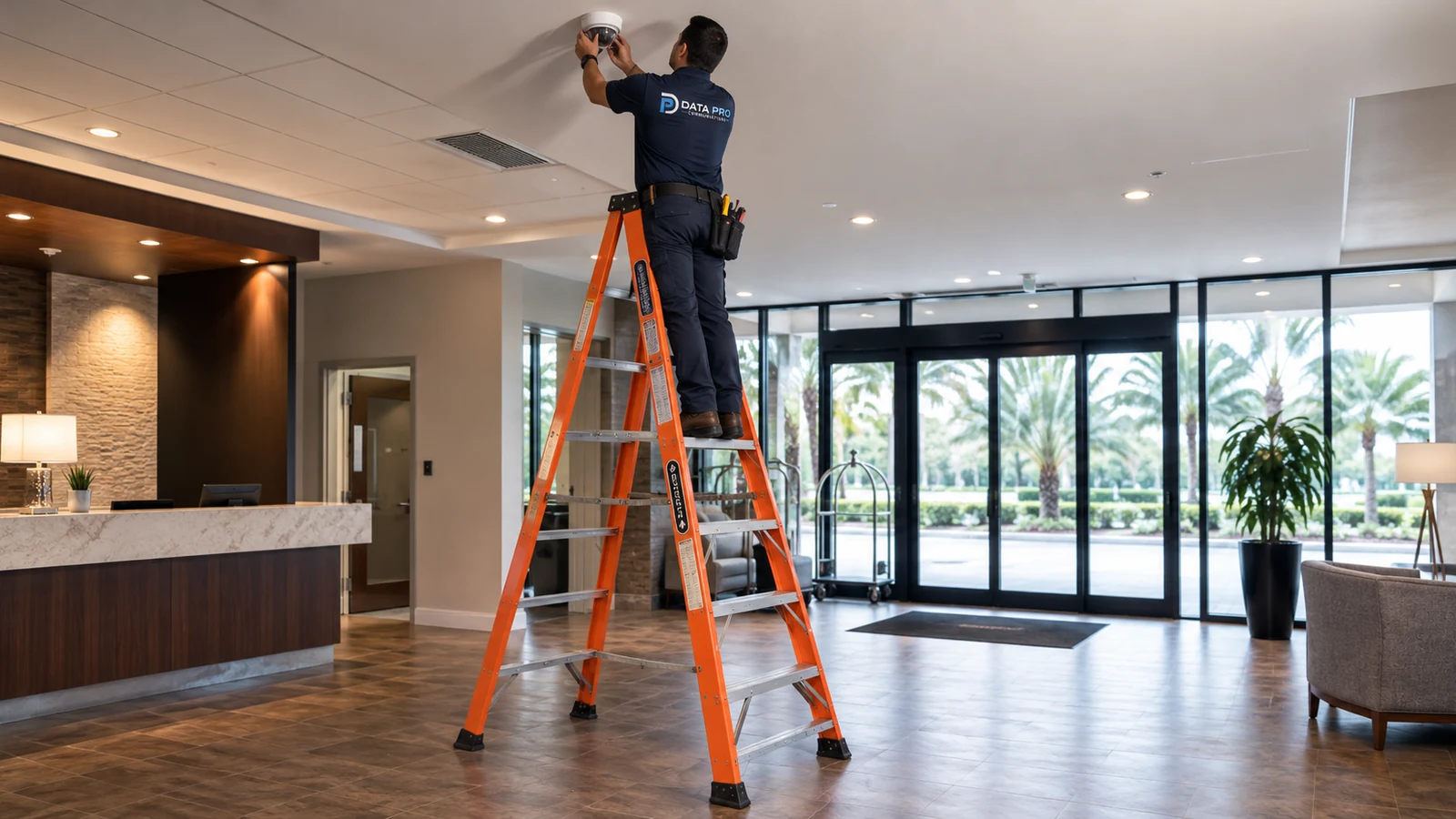
Confirm structure, attachment method, lift access, work hours and whether future cleaning can be performed safely.
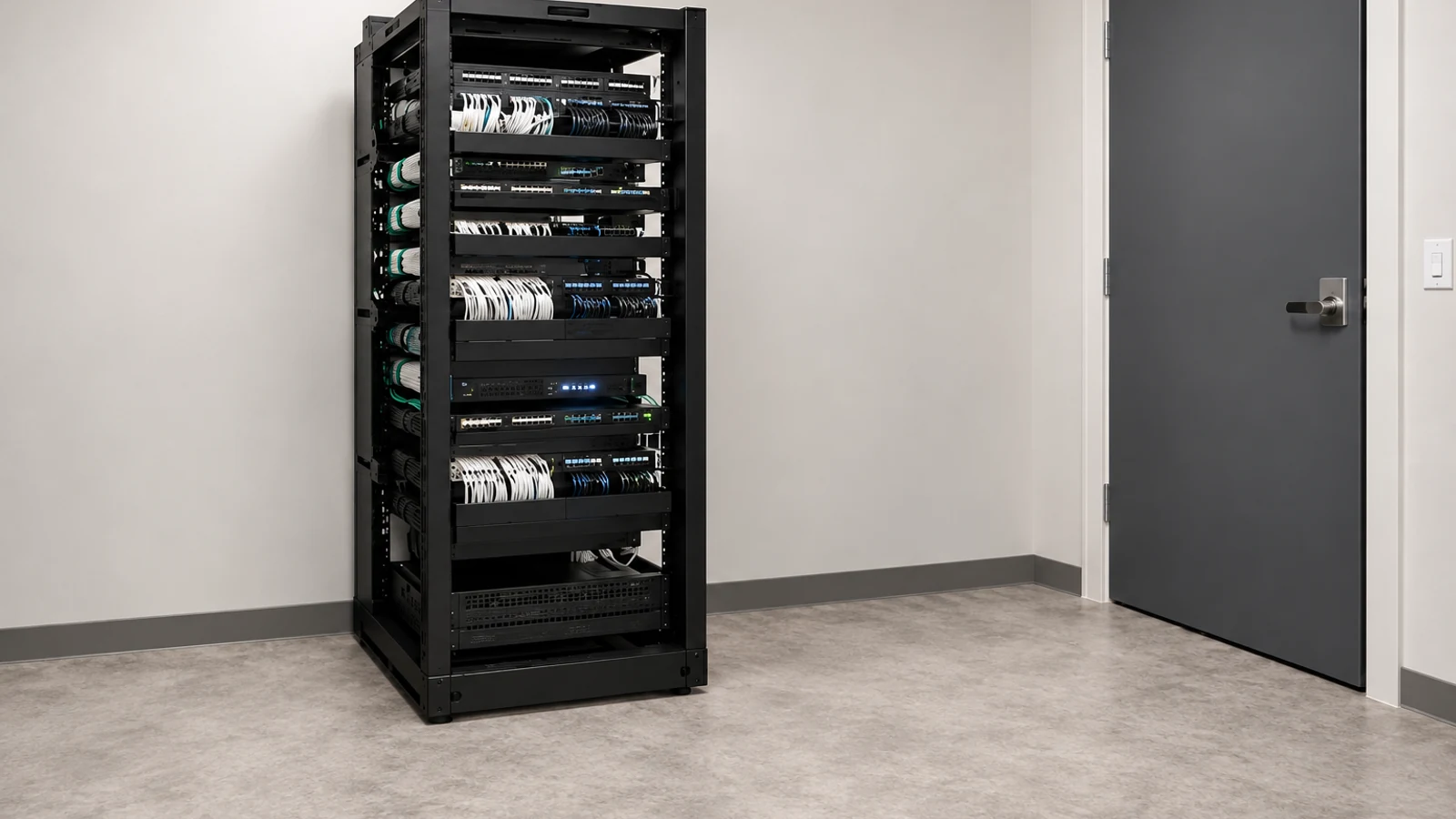
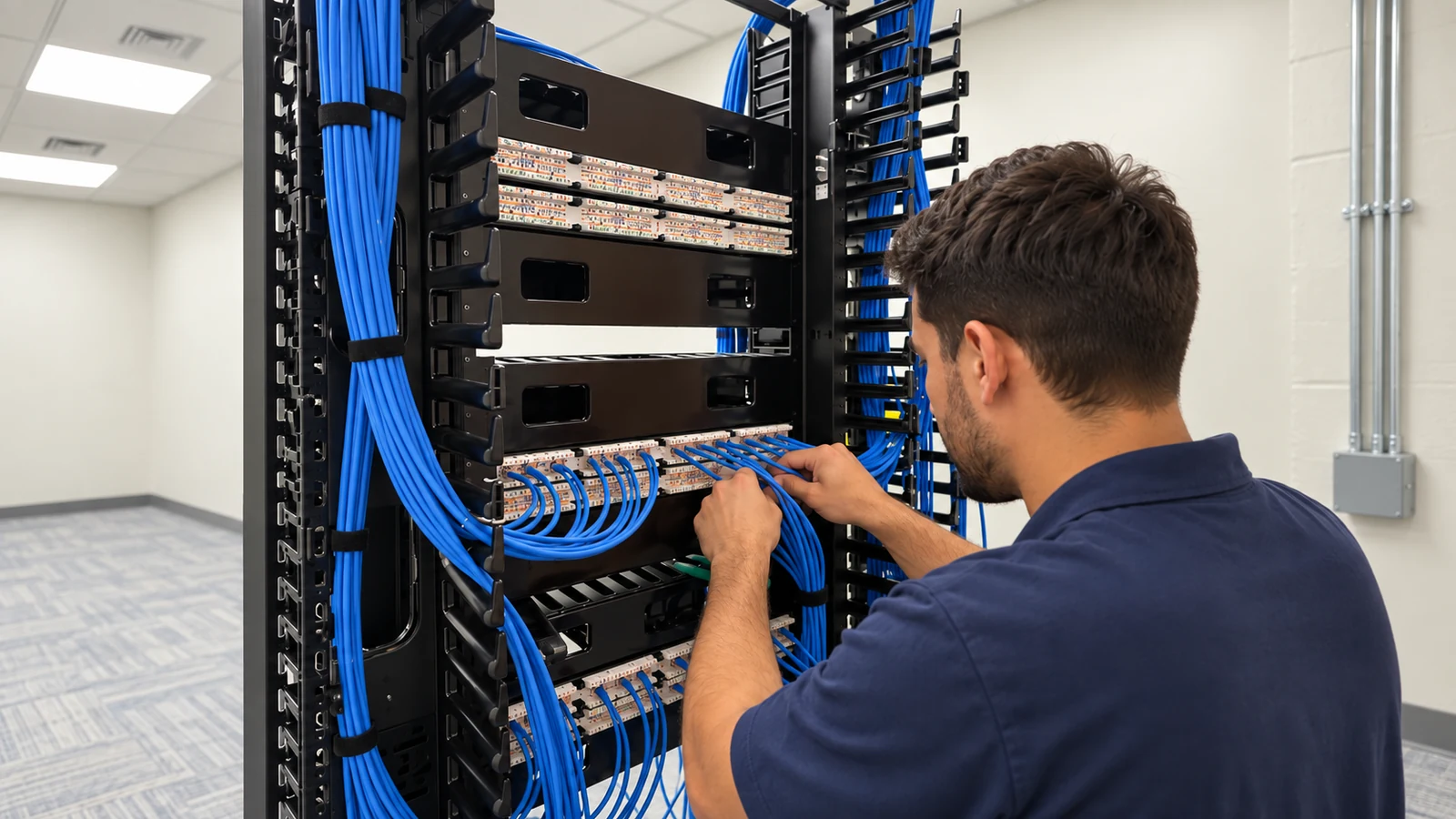
Cable length, inaccessible ceilings, fire-rated penetrations, exterior exposure and separate buildings can alter the network design.
Required days, recording mode, export frequency and investigation process determine storage and permissions.
Identify who approves views, network changes, credentials, downtime, privacy boundaries and final acceptance.
EAST ORLANDO CONTEXT
East Orlando retrofit work may encounter occupied suites, unknown ceiling pathways and shared telecom rooms. Early approval of view boundaries, access windows and network ownership prevents those building conditions from becoming late design changes.
PROJECT GUIDANCE
Frame entrances and property areas carefully, and obtain appropriate legal or policy review for sensitive locations or audio features.
Backlit doors, headlights, reflective floors and dark exteriors may require different placement or illumination.
Confirm structure, attachment method, lift access, work hours and whether future cleaning can be performed safely.
Cable length, inaccessible ceilings, fire-rated penetrations, exterior exposure and separate buildings can alter the network design.
Required days, recording mode, export frequency and investigation process determine storage and permissions.
Identify who approves views, network changes, credentials, downtime, privacy boundaries and final acceptance.
PROPERTY APPLICATIONS
Moving the camera away from direct exterior light can improve faces more than increasing resolution.
Landlord rules and fire-rated assemblies may require approved routes and scheduled access before cabling begins.
Headlights, vehicle speed and lane width may call for a dedicated capture view instead of a general overview.
PROJECT PROCESS
Confirm what each camera includes and excludes with property stakeholders.
Mark unknown pathway, network and power conditions for field confirmation.
Name who can search, export, retain and release recordings.
PLANNING RISKS
Hidden conditions still require qualified inspection.
Property policy and legal review should address the actual use case.
Storage calculations should state their codec, frame rate and motion assumptions.
PLANNING RISKS
Accounts, firewall policy and secure authentication need customer coordination.
A camera that cannot be cleaned or reset economically creates long-term service cost.
Actual obstructions and lighting can invalidate paper locations.
TECHNICAL PLANNING
Operations, IT, property management and legal or policy review where needed.
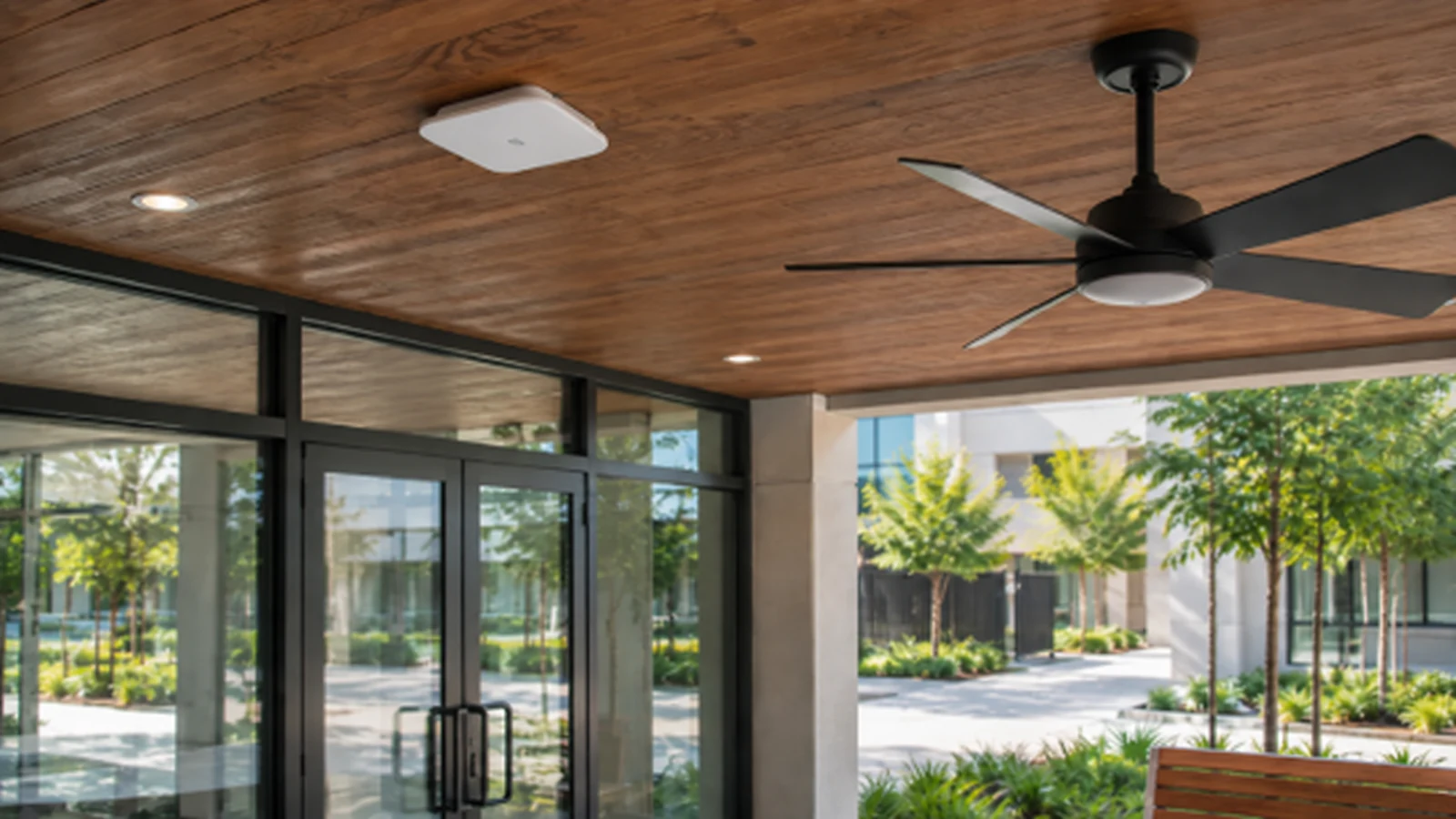
Mounting surface, pathway, power and radio conditions.
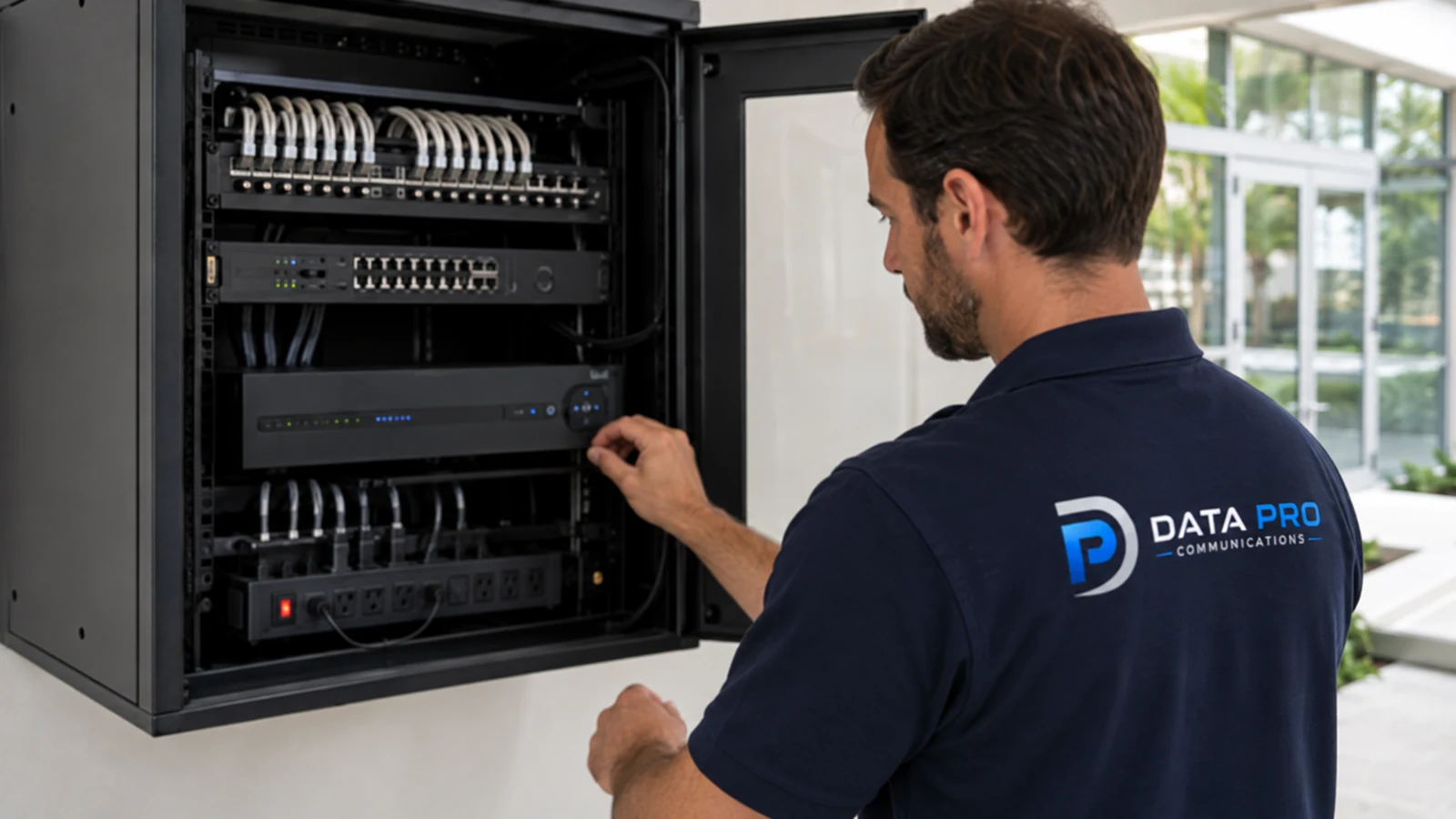
PoE, bandwidth, licenses and storage.
User permissions, retention, export and incident response.
PROJECT GUIDANCE
RELATED PATHS

PROJECT PROCESS
Frame entrances and property areas carefully, and obtain appropriate legal or policy review for sensitive locations or audio features.
Backlit doors, headlights, reflective floors and dark exteriors may require different placement or illumination.
Operations, IT, property management and legal or policy review where needed.
Name who can search, export, retain and release recordings.
FAQ
Consider sensitive areas, neighboring property, audio capture, employee or tenant policy, retention and who may access recordings.
Bright exterior light can underexpose faces inside unless placement, exposure settings or supplemental lighting address the contrast.
Weak, decorative or inaccessible surfaces may not support the intended hardware or may require special attachment and restoration.
Blocked ceilings, long distances, rated penetrations, exterior transitions, lifts and separate buildings can require different methods.
Start with the required investigation window, then model channel count, bitrate, frame rate, codec and recording schedule.
An authorized property stakeholder should confirm operational purpose, boundaries and any privacy or tenant concerns.
IT may need to approve switching, PoE, addressing, VLANs, uplinks, remote access, accounts and cybersecurity controls.
No. Compatibility, condition, distance, termination and performance should be verified before the design depends on them.
Lenses require cleaning and devices may need adjustment or replacement; difficult access increases downtime and service cost.
Name the administrators, evidence custodians, network contacts, approvers and service contacts before commissioning.
A pre-installation review earns its value by changing the plan while changes are still inexpensive. The final camera schedule should reflect verified conditions, assigned responsibilities and known limitations rather than optimistic assumptions.