
Florida Licensed
FL License #EC13016138 for low-voltage systems work.
CALL ROUTING AND AUTHORIZED ENTRY RELEASE
An intercom answers two practical questions: who is requesting entry, and which authorized person should receive that request. Audio, video, call routing and release functions must follow the reception, tenant or gate workflow at the property.
Data Pro Communications configures supported entry stations and endpoints while keeping credentials and ongoing controlled-door permissions on the separate Access Control Systems path.
FL License #EC13016138 for low-voltage systems work.
Entry stations are designed around who calls, who answers and who may release the opening.
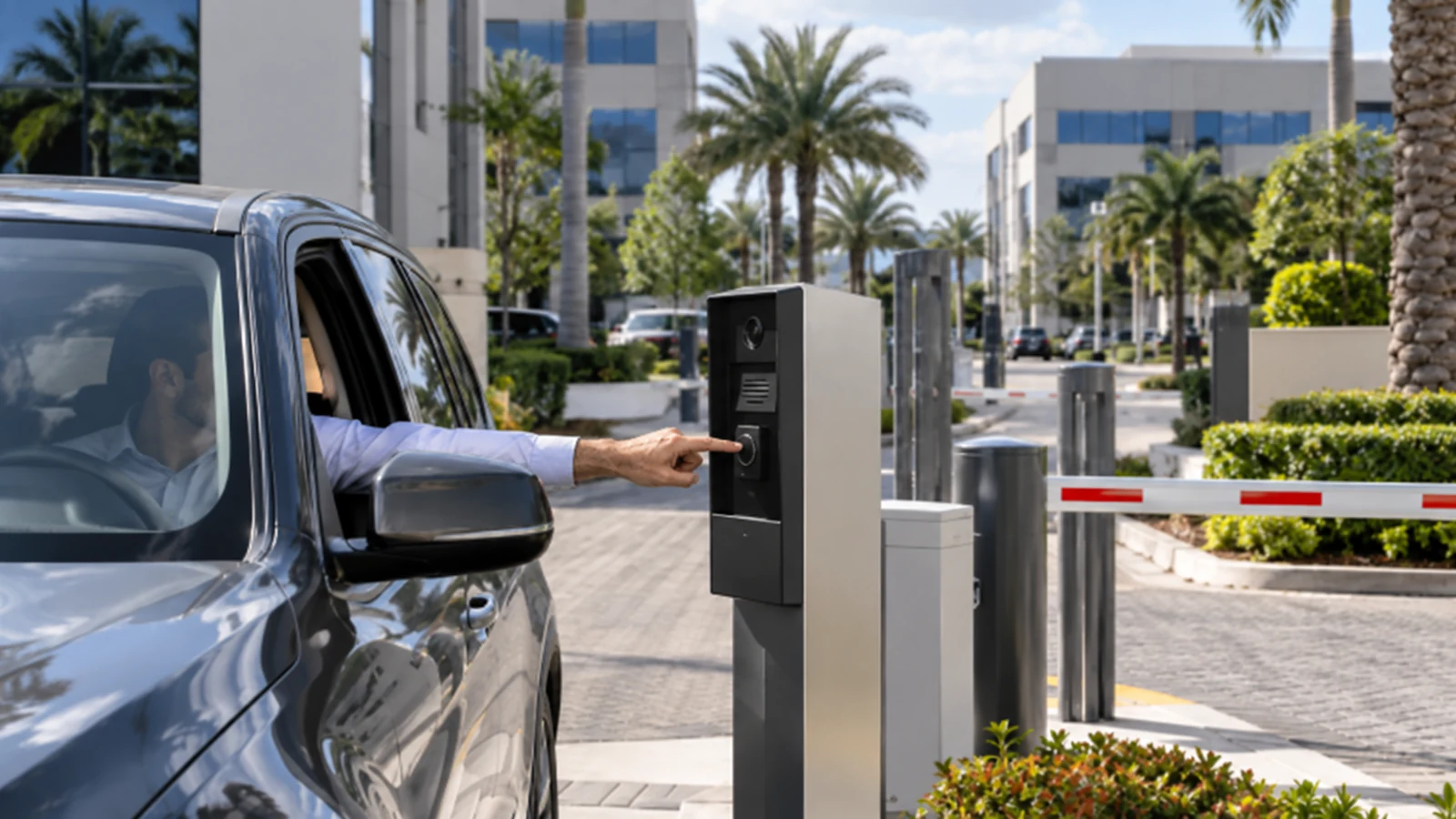
Station placement accounts for noise, glare, weather and the visitor position.
Directories, schedules, fallback destinations and account recovery remain under authorized control.
Communication and door or gate release are tested together without granting standing visitor access.
PROJECT GUIDANCE
The intercom scope identifies the entry point, call destination, audio or video requirement, release authority, fallback path, network and power dependency, and the event record available from the platform. The system should make a visitor interaction understandable from call to authorized release.
PLANNING RISKS
A directory or schedule can be technically active while routing visitors to an unavailable desk, tenant or mobile user.
Traffic, wind, mounting position, volume and echo can make the visitor or respondent difficult to understand.
The call may work while the door or gate release fails because the access controller, relay, network or gate operator is unavailable.
IP stations, mobile apps and hosted services can lose different functions when connectivity changes.
Reception, tenants, security and administrators may need different call, release and directory permissions.
Visitors need a practical next step when the primary respondent is unavailable or the platform is offline.
CAPABILITIES
Map the visitor, delivery or gate interaction from call initiation through authorized response.
Plan supported entry stations for the environmental, mounting, camera and audio conditions.
Configure desk, reception, tenant or supported mobile destinations by schedule and role.
Organize labels, destinations and permissions so authorized administrators can maintain the system.
Connect the approved release output to compatible access or gate equipment with a defined authority boundary.
Place representative calls, verify audio/video and test release and no-answer behavior with authorized users.
PROPERTY APPLICATIONS
Route a visitor call to staffed reception and release the controlled door after verification.
Explore Reception vestibuleProvide two-way communication where the respondent is remote from the gate operator.
Explore Commercial vehicle gateDirect visitors to authorized tenant or management endpoints while keeping credentialed resident entry separate.
Explore Multifamily common entranceRoute calls to an approved duty contact during a limited schedule.
Explore After-hours delivery pointLet staff communicate before admitting a visitor into a controlled suite.
Explore Healthcare or professional officeGive vendors a defined call path without granting a standing credential.
Explore Service entranceTECHNICAL PLANNING
Account for noise, weather, glare, mounting height, accessibility and the visitor position at the station.
List primary, secondary and no-answer targets by time and user role.
Document whether the station, access controller or gate operator owns the release output and status feedback.
Identify PoE, local power, VLAN, internet or hosted-service dependencies for the selected platform.
A video view can add context but should not be presented as guaranteed identification.
Assign ownership for directories, schedules, users, mobile endpoints and account recovery.
PROJECT GUIDANCE
An intercom can request a door or gate release through a compatible access controller or relay. The call, authorization and release result should be tested as one visitor workflow while credential enrollment and ongoing controlled-entry schedules remain with Access Control Systems.
EAST ORLANDO CONTEXT
Visitor entry patterns vary among professional offices near Baldwin Park, managed properties around Waterford Lakes, multifamily common areas and vehicle-oriented sites along east Semoran or Lee Vista. The routing plan should follow who is actually available to answer at each time, not a generic front-desk assumption.
RELATED PATHS
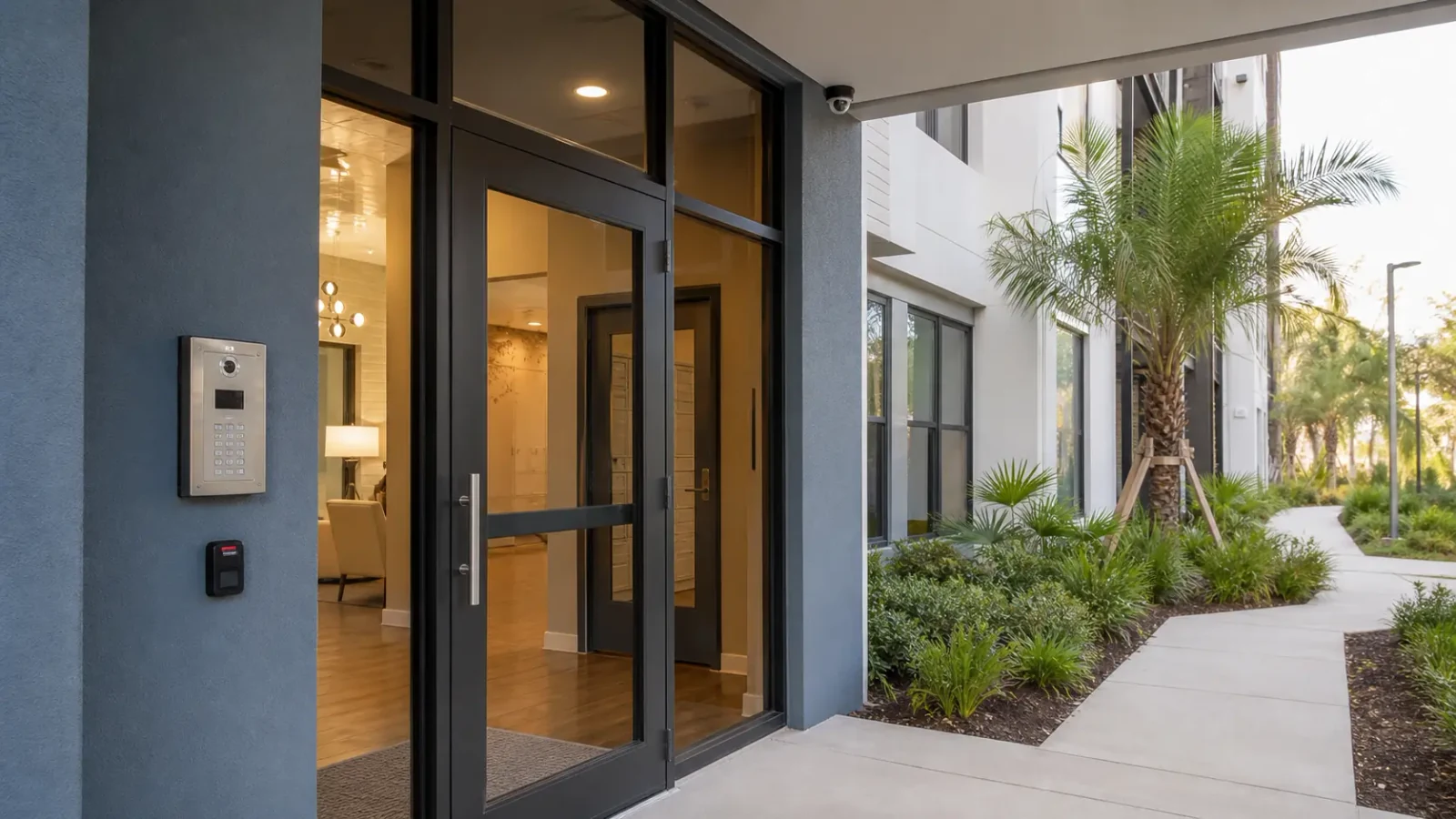
Access control owns credentials and controlled-opening logic used by an authorized intercom release.
View Access Control Systems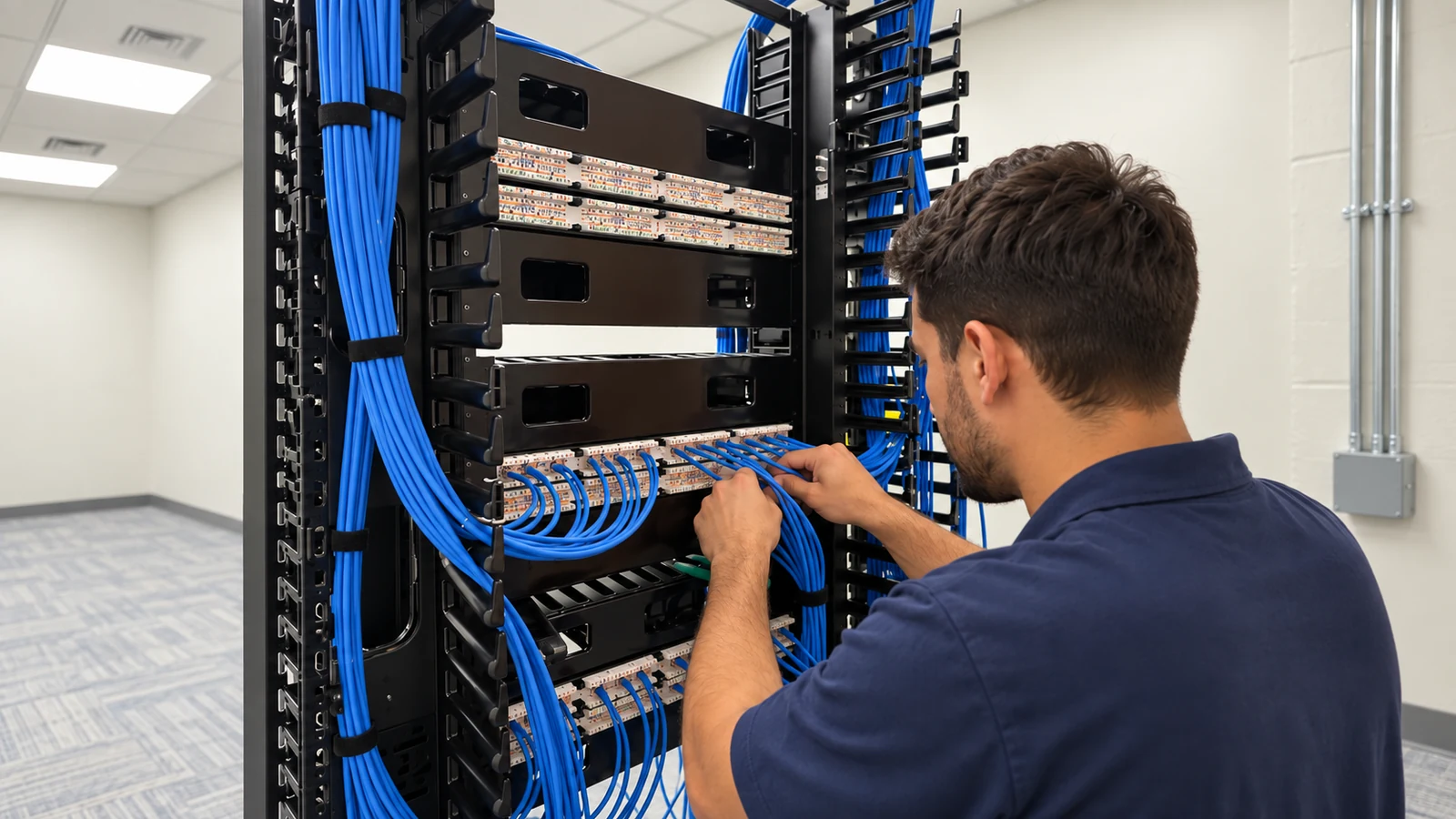
IP stations and call endpoints depend on defined PoE, VLAN and platform connectivity.
View Network Solutions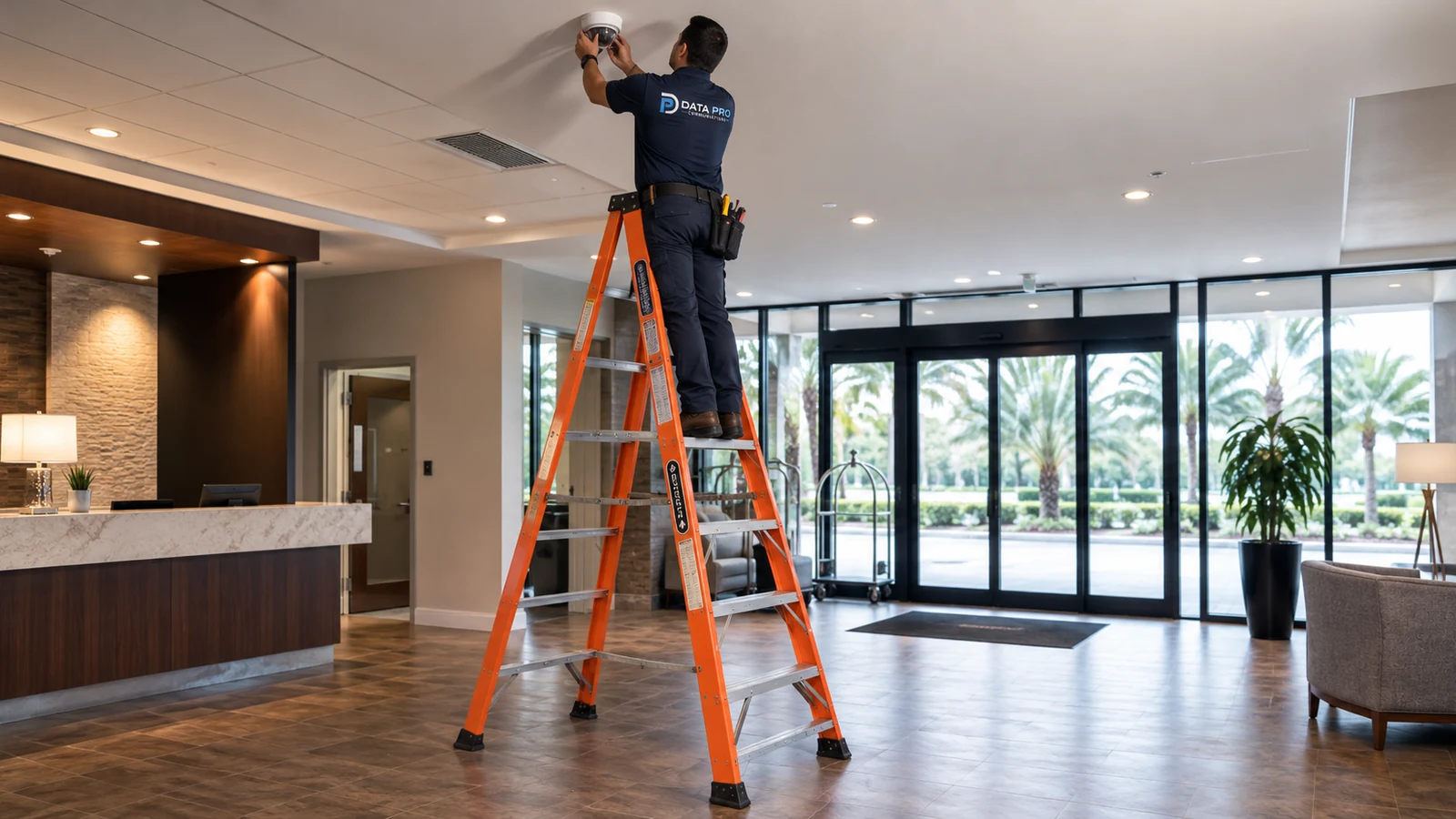
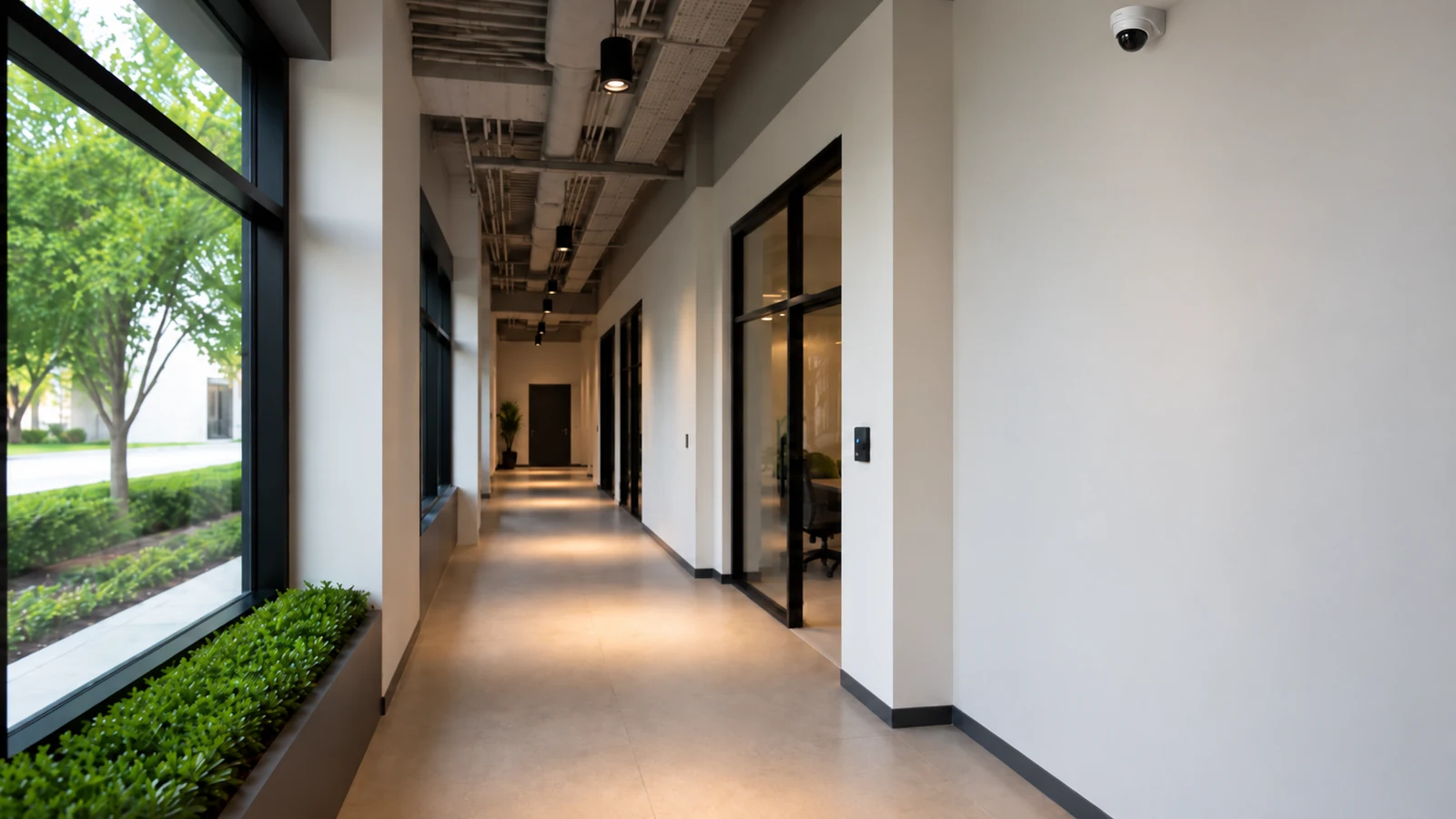
A separate camera view may support entry context when the intercom station view is insufficient.
View Security Cameras InstallationRELATED PATHS
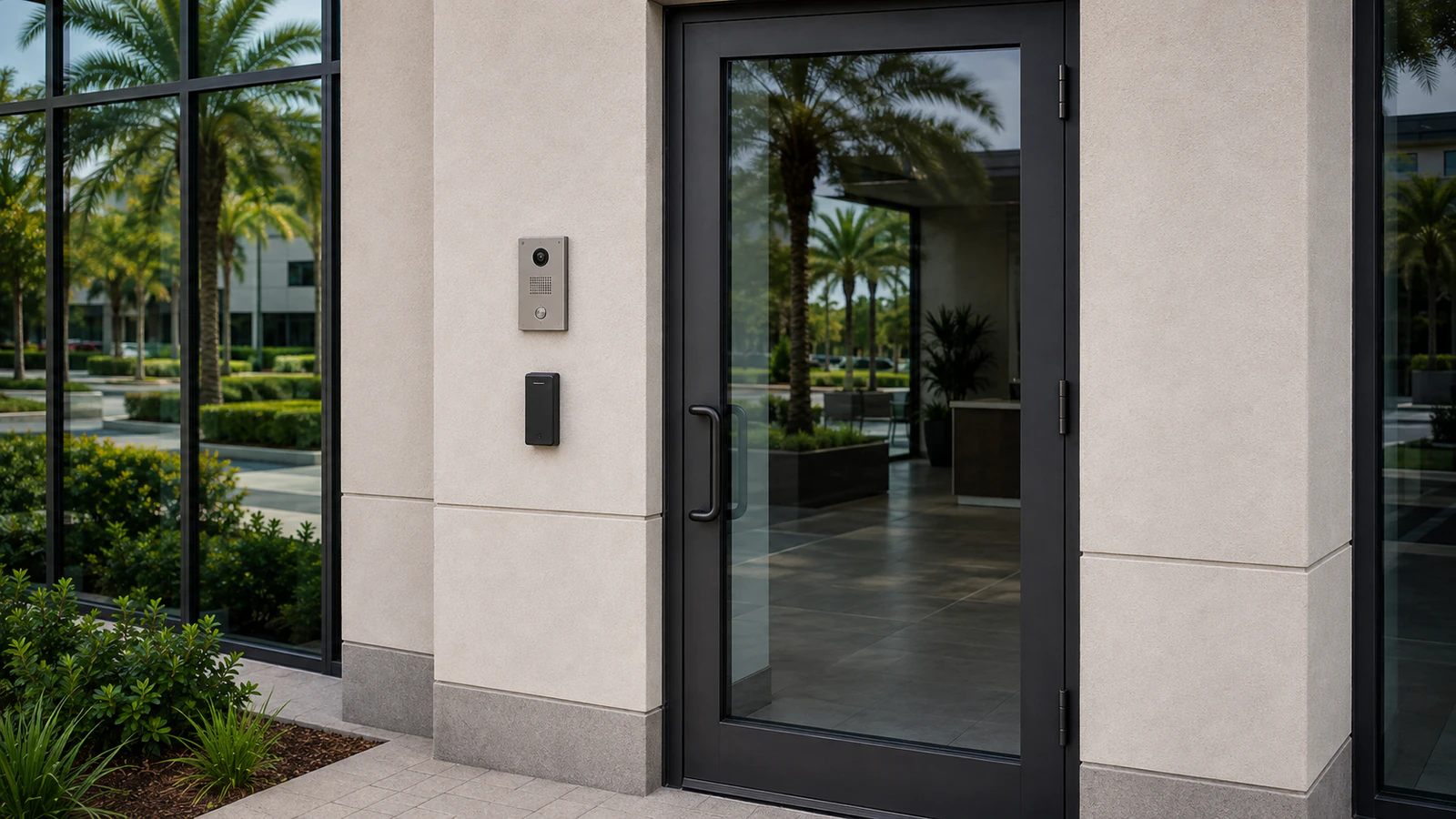
Reception routing connects guests with an authorized respondent.
Explore Visitor-Facing Offices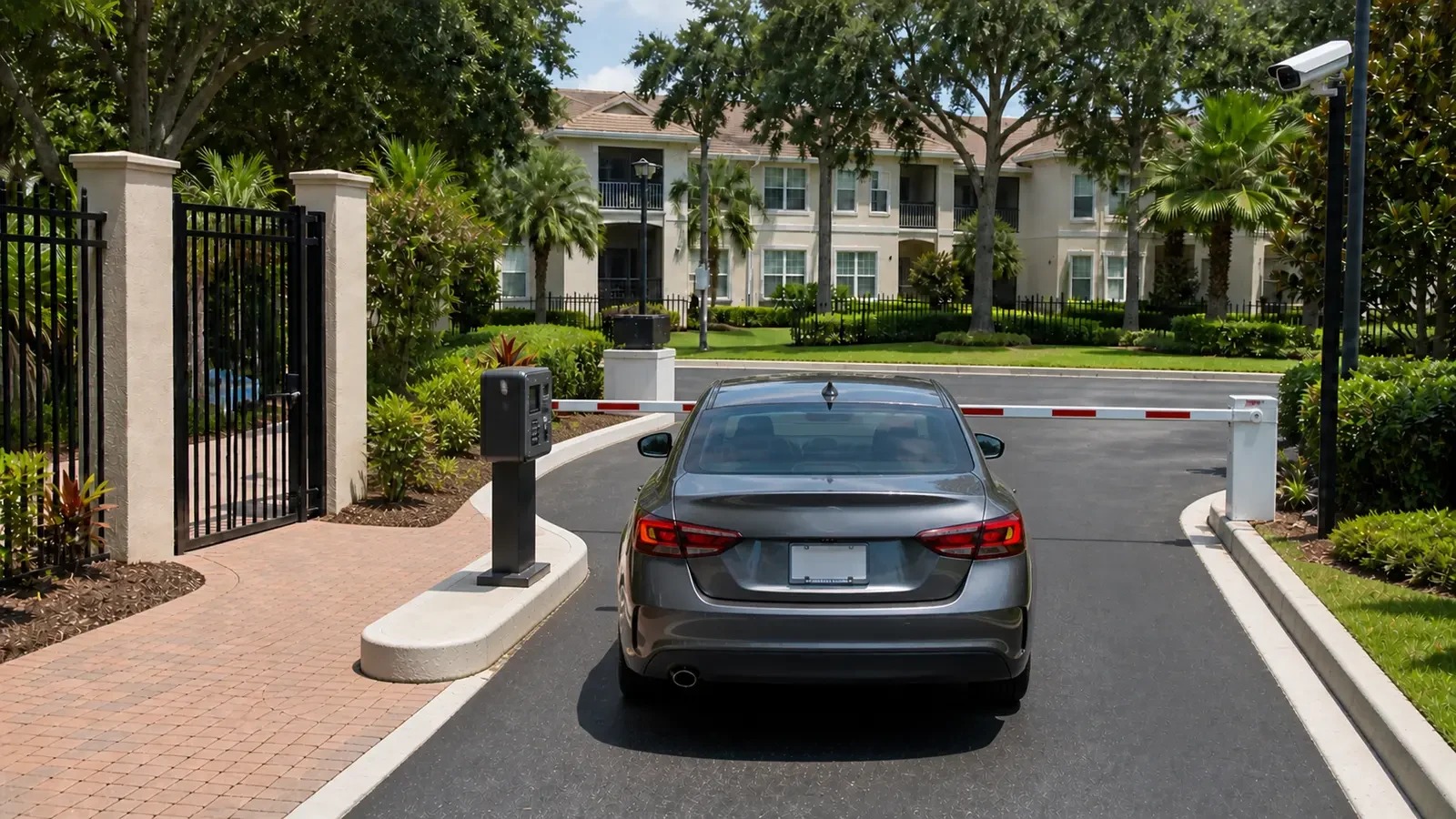
Remote communication must align with operator and release logic.
Explore Vehicle Gates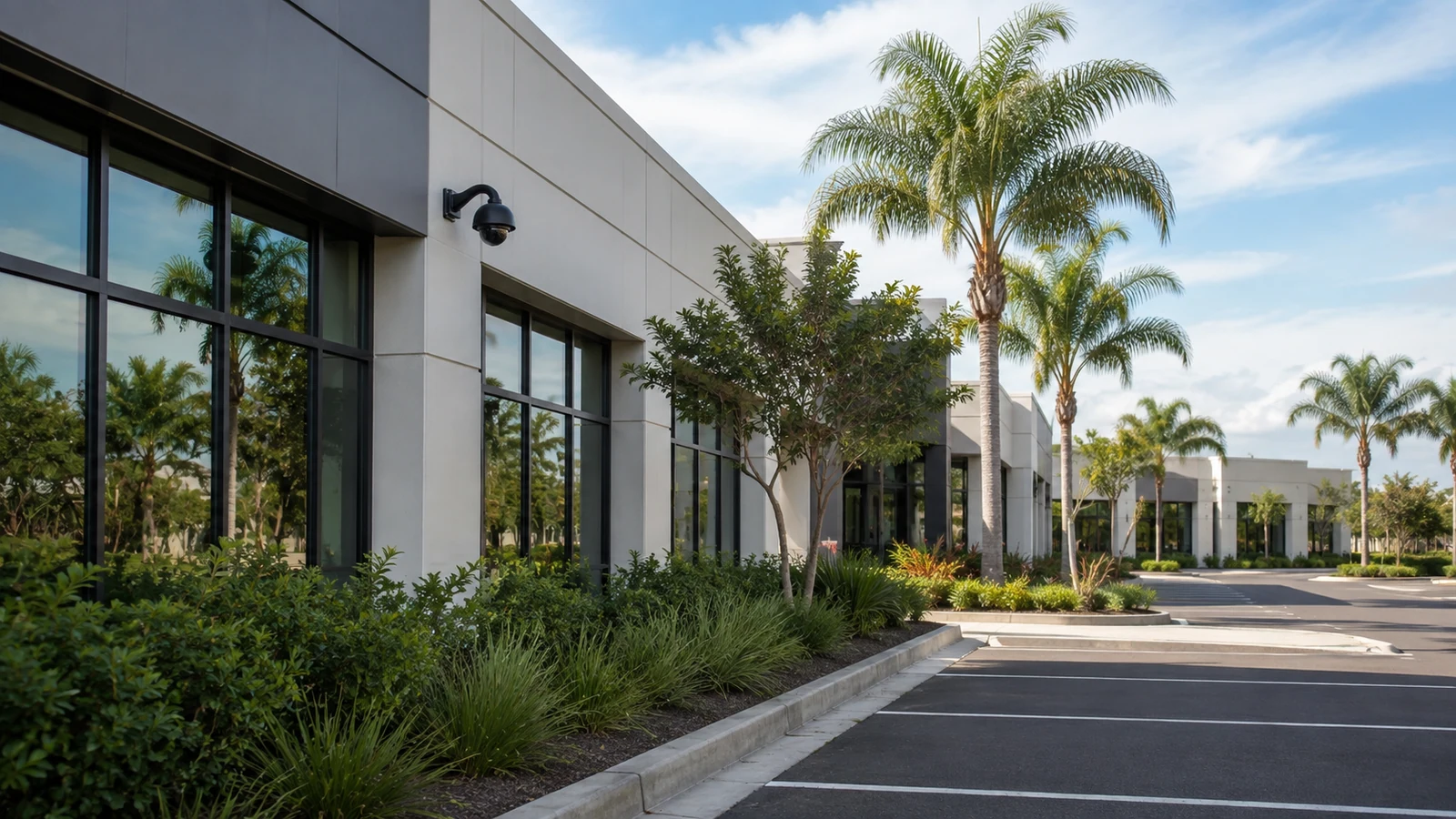
Tenant directories and management ownership change more often than the physical station.
Explore Multifamily Common AreasPROJECT PROCESS
Define entry points, respondents, schedules, release authority and fallback behavior.
Select supported audio/video stations and assign primary, alternate and no-answer destinations.
Integrate the approved door or gate output with clear access-control and network boundaries.
Place calls from each station, verify audio/video, exercise authorized release and document administration.
LICENSED SUPPORT
Data Pro Communications operates under FL License #EC13016138. Intercom turnover demonstrates that visitors can reach the intended respondent and that authorized users can complete the supported release workflow, including fallback behavior.
FAQ
An intercom lets a visitor communicate with an authorized respondent and request release. Access control grants standing permissions through credentials, schedules and door logic.
Many platforms support sequential, simultaneous or scheduled destinations, but the exact routing depends on the product, licenses, endpoints and customer policy.
The system can follow a configured fallback such as another desk, duty contact, message or denial. The choice should match the property workflow and platform support.
Some systems support desk phones, soft clients or mobile apps. Network access, accounts, notifications, licensing and platform service availability must be verified.
An authorized user triggers a supported relay or integration to the gate or access system. Safety devices, gate operator logic and release status remain part of the approved gate workflow.
No. Video provides scene context, but lighting, angle, network quality and visitor position affect the image. It should not be described as guaranteed identification.
Possibly, if voltage, load, relay method, access-control logic, door hardware and release behavior are compatible and in serviceable condition.
Requirements may include PoE or local power, switch ports, VLAN connectivity, DNS, time, internet or hosted-service access and permitted paths to call endpoints.
An authorized customer administrator should own names, destinations, schedules, permissions and account recovery, with changes recorded when staff or tenants turn over.
Test calls, audio in both directions, video where used, primary and fallback routing, door or gate release, no-answer behavior, time schedules and administrator access.
Identify the entry station, people who should receive calls, release method and fallback path. An intercom review can map the visitor interaction before equipment is selected.