
Florida Licensed
FL License #EC13016138 for low-voltage systems work.
COMMERCIAL INFRASTRUCTURE AND SYSTEMS GUIDE
Camera and security projects depend on more than the devices visible at the edge. Cabling carries signals, switches provide power and connectivity, fiber crosses long distances, controlled doors shape entry, and service records keep installed systems supportable.
This hub helps East Orlando property teams identify which low-voltage solution owns the next technical decision without replacing the deeper scope found on each child page.
FL License #EC13016138 for low-voltage systems work.
The Hub begins with the property decision and routes it to the solution family that owns the controlling dependency.
Passive cabling, active networks, AV, access, intercom, maintenance and fiber are compared by function rather than blended into one offer.
Supporting infrastructure is related to camera and security projects where relevant without displacing camera-service intent.
A buyer can identify the right survey or specialist conversation before child-page technical detail is introduced.
PROJECT GUIDANCE
Choose Cabling for passive copper pathways and terminations; Network Solutions for switching, PoE, uplinks and segmentation; Audio & Video for commercial room and presentation systems; Access Control for credentials and controlled openings; Intercom for visitor communication and release; Service & Maintenance for ongoing system care; and Fiber for optical backbones and long building links.
PLANNING RISKS
A connectivity complaint can originate in passive cable, active switching, an optical uplink or the endpoint itself, and each requires a different scope.
Property, IT, security and vendor responsibilities become unclear when passive infrastructure and active administration are treated as one task.
Copper channel limits, building separation and bandwidth needs may make fiber or a different topology necessary.
A technically functional door, intercom or meeting room can still fail the people who must use it every day.
Unknown labels, credentials, topology and asset history increase the time required for future changes and service.
An office buildout, warehouse link, visitor entrance and managed community have different access, pathway and support constraints.
CAPABILITIES
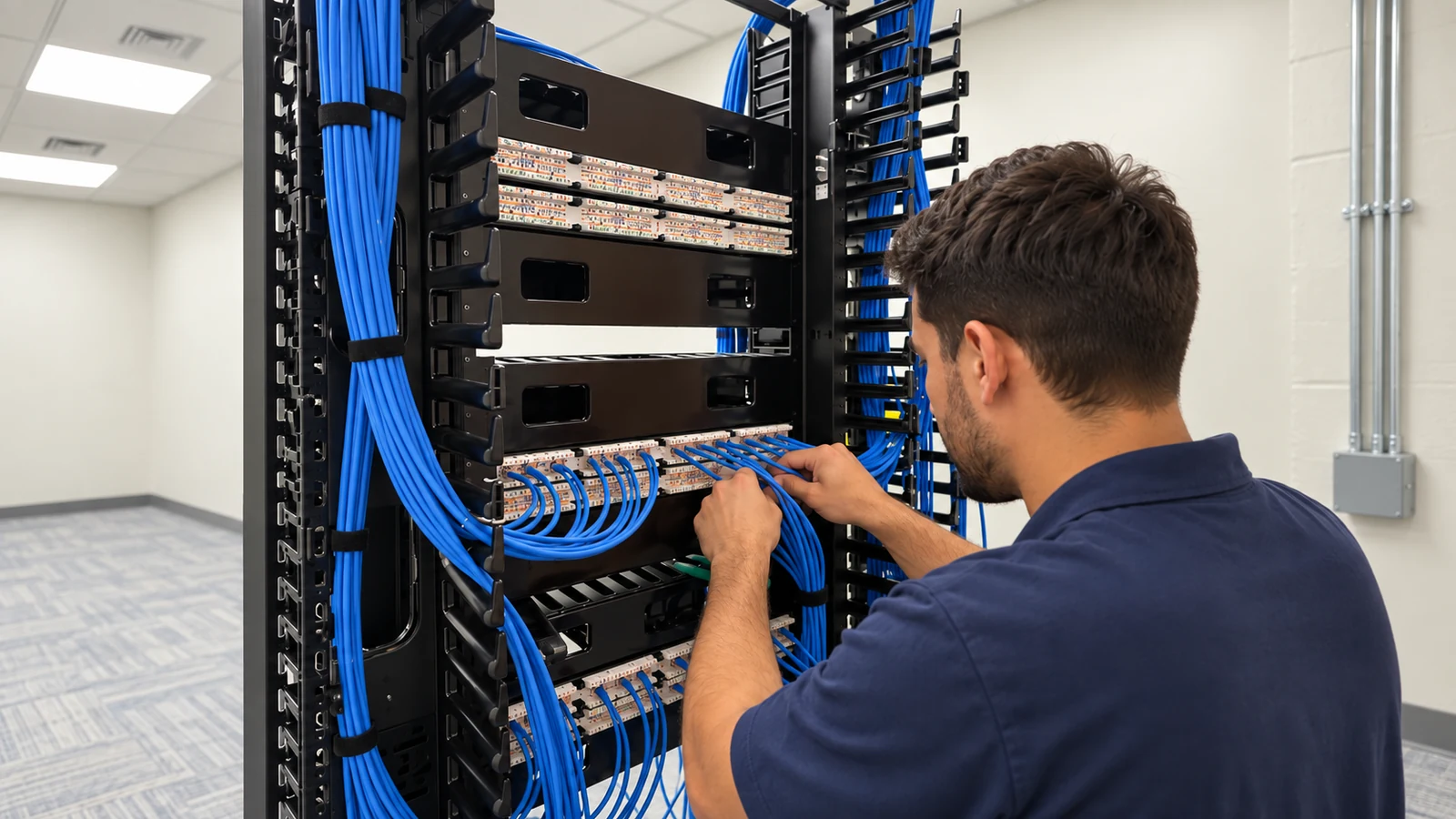
Build and document passive Cat6 and Cat6A pathways, racks, patch panels, terminations and endpoint drops.
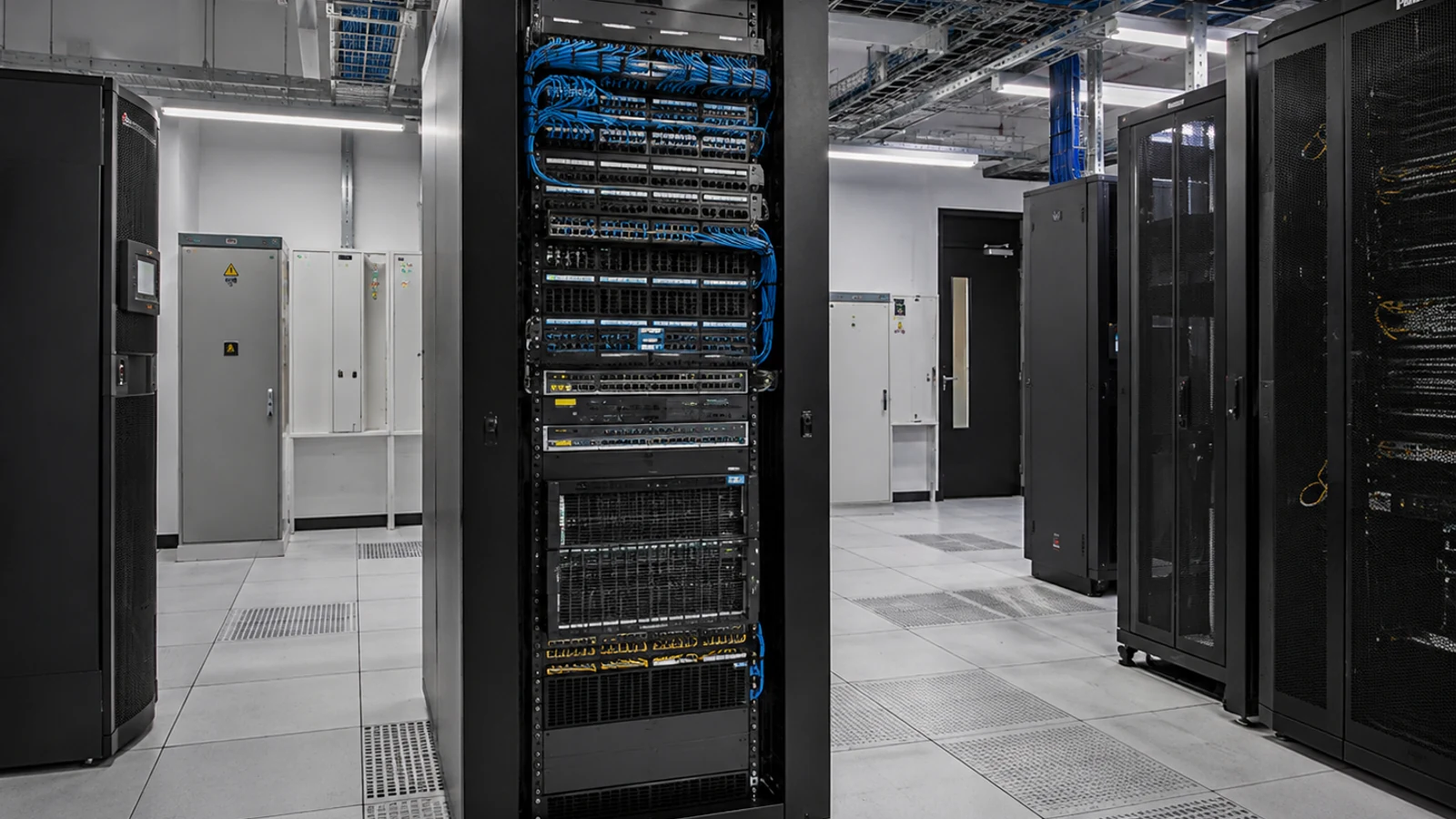
Plan active switching, PoE, uplinks, VLANs, topology and connected-device infrastructure.
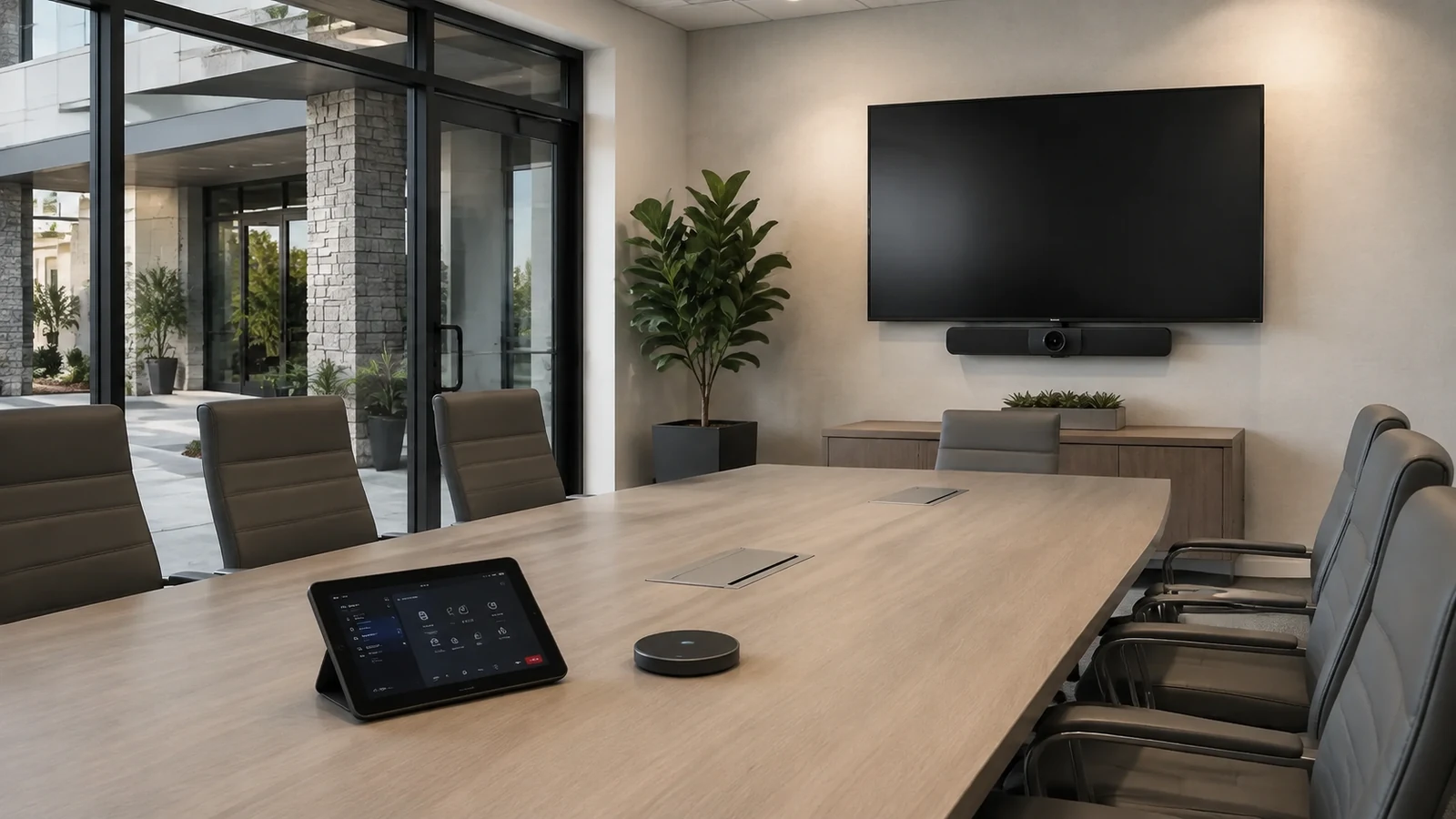
Integrate commercial displays, audio, conferencing, signal transport and room controls.
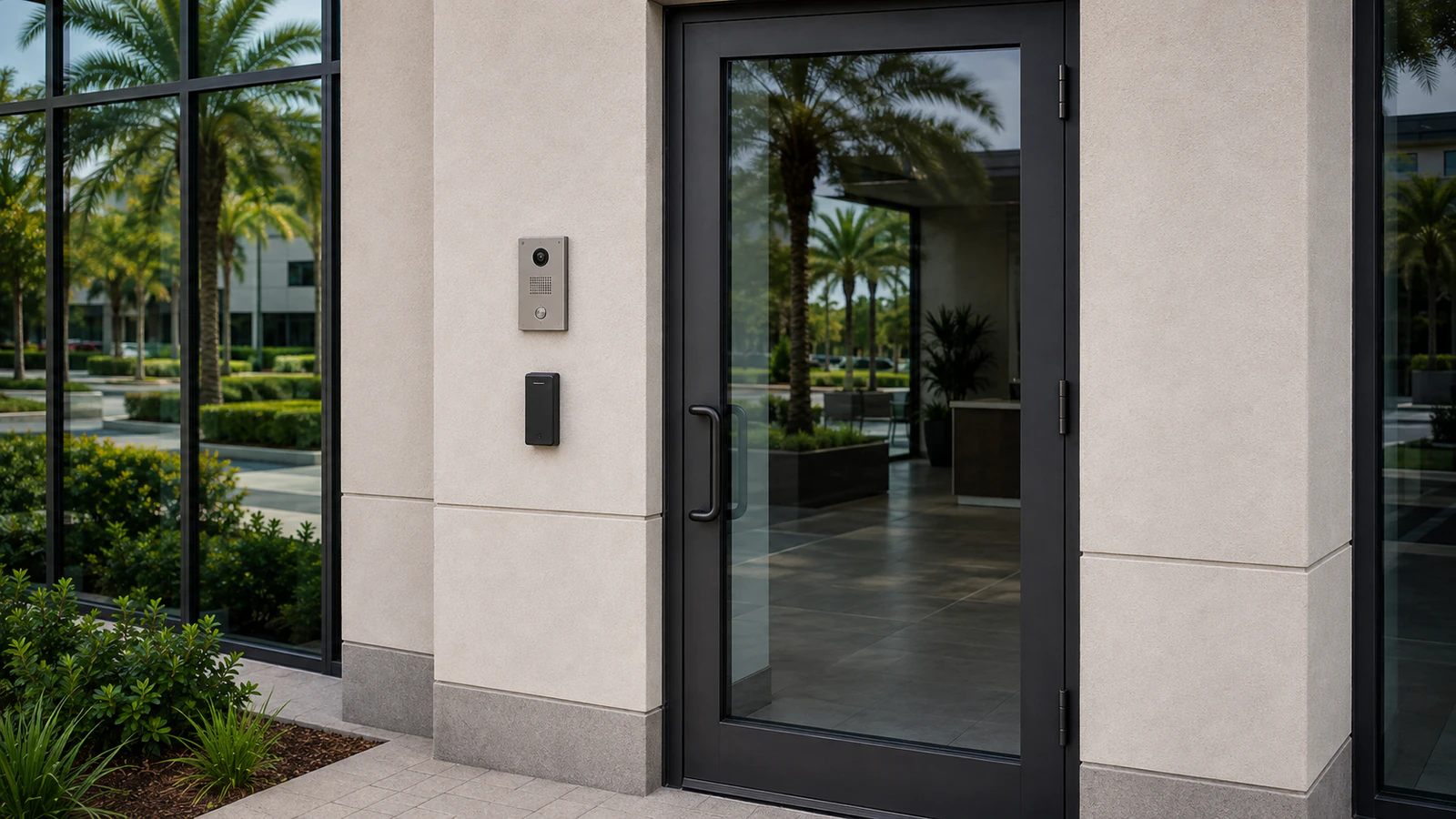
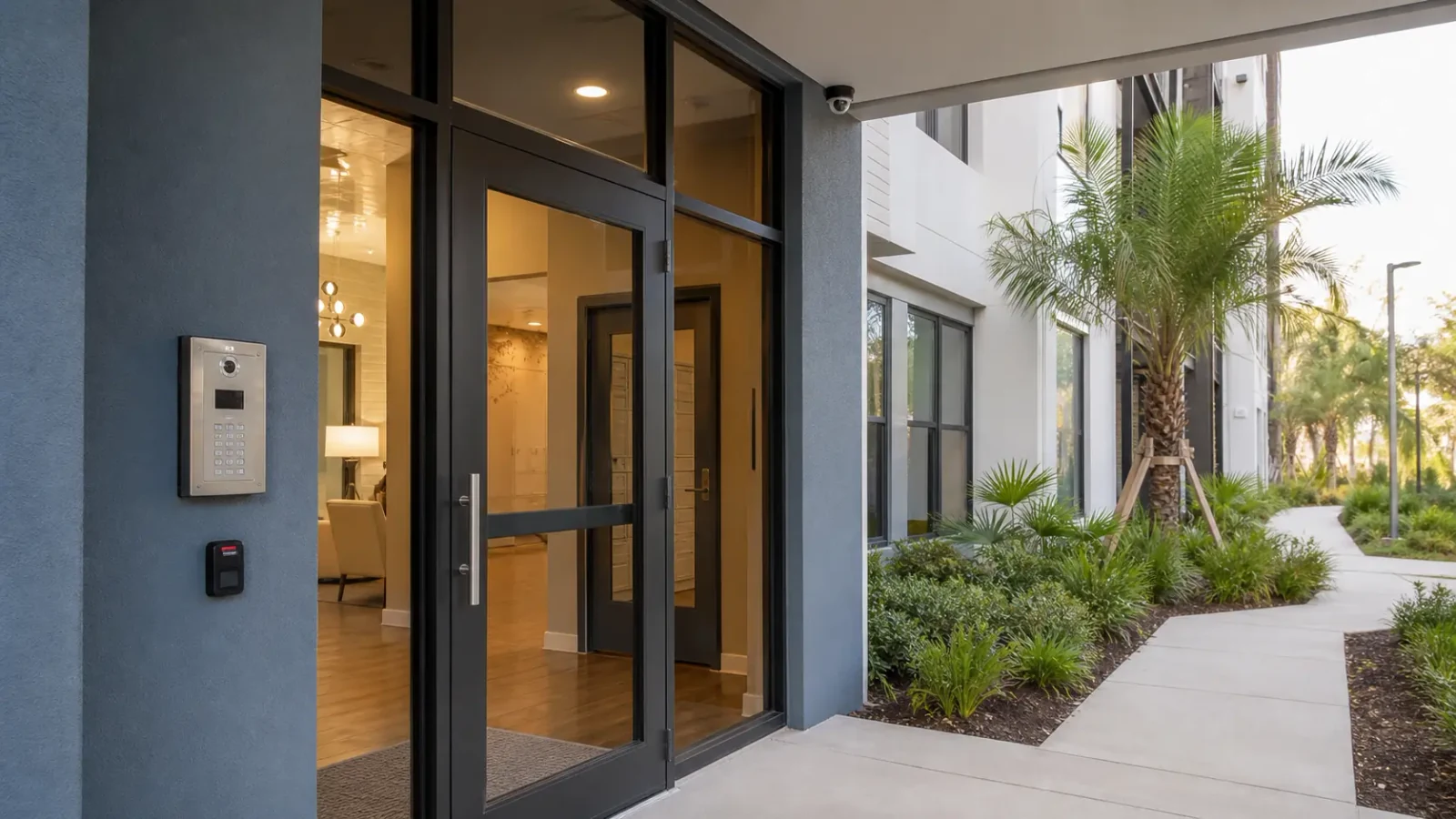
Coordinate credentials, readers, controlled openings, door interfaces, schedules and audit workflows.
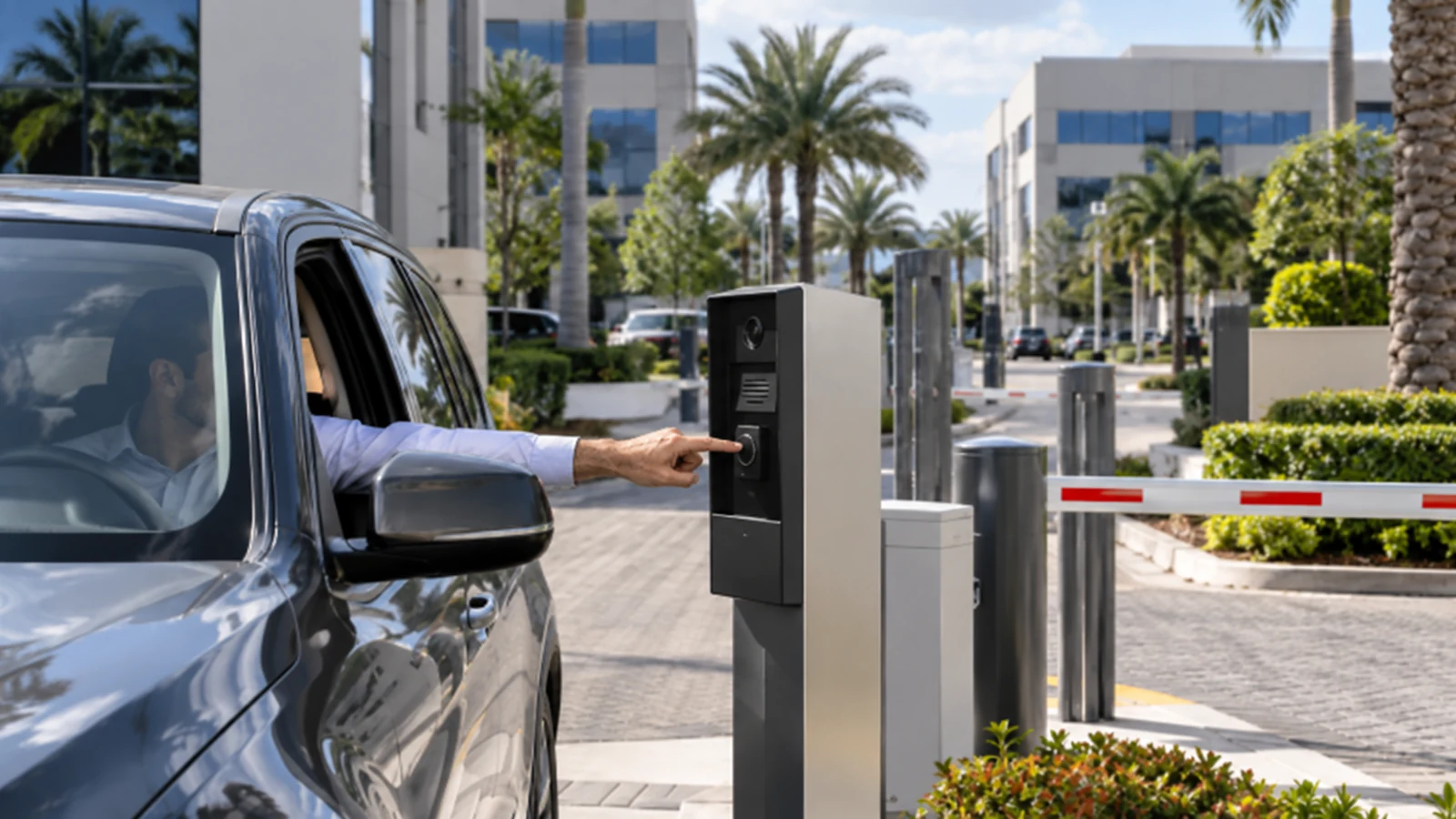
Connect visitor stations, call destinations and authorized door or gate release.
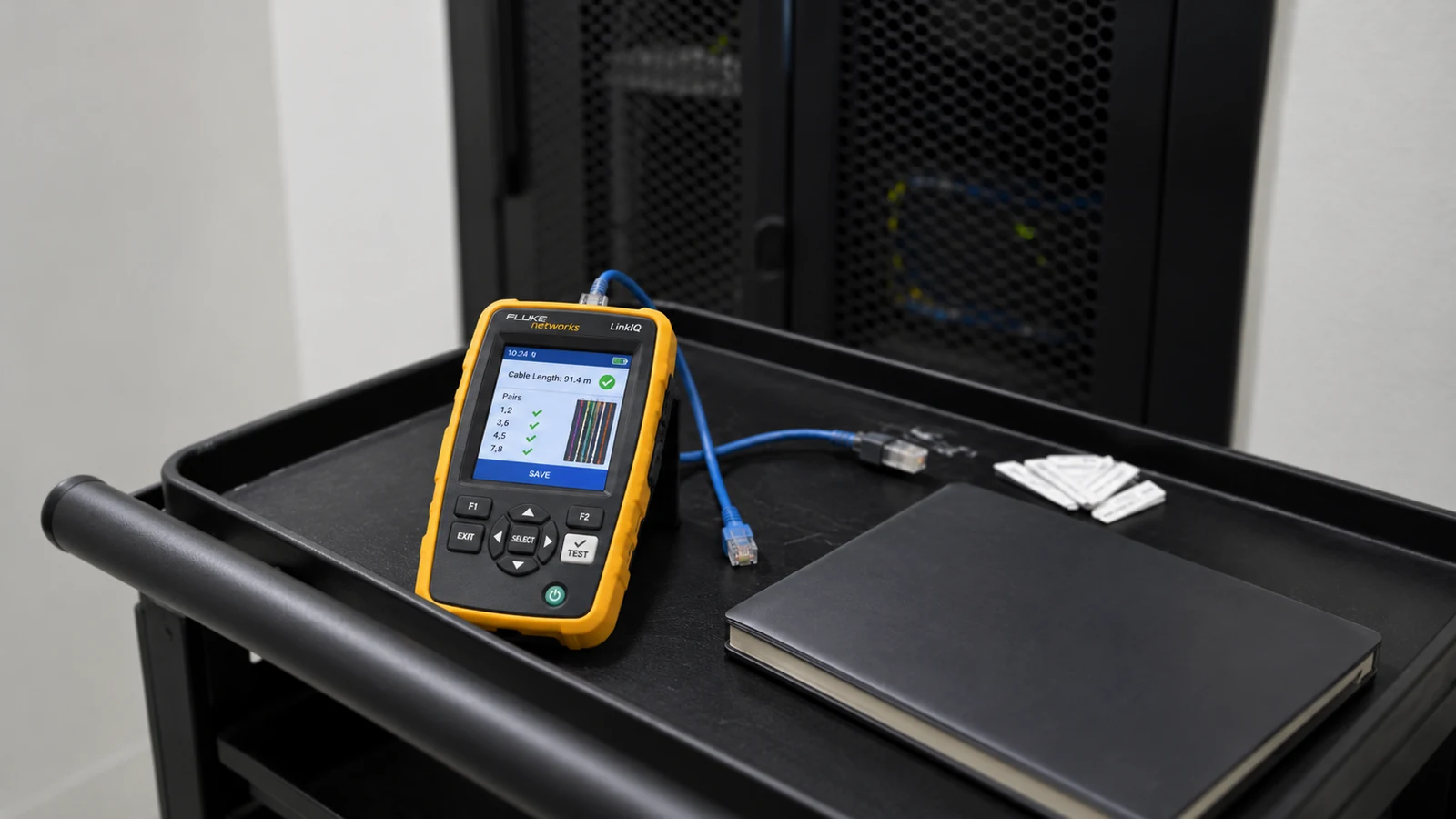
Maintain an asset and service history across supportable low-voltage systems and plan corrective work.
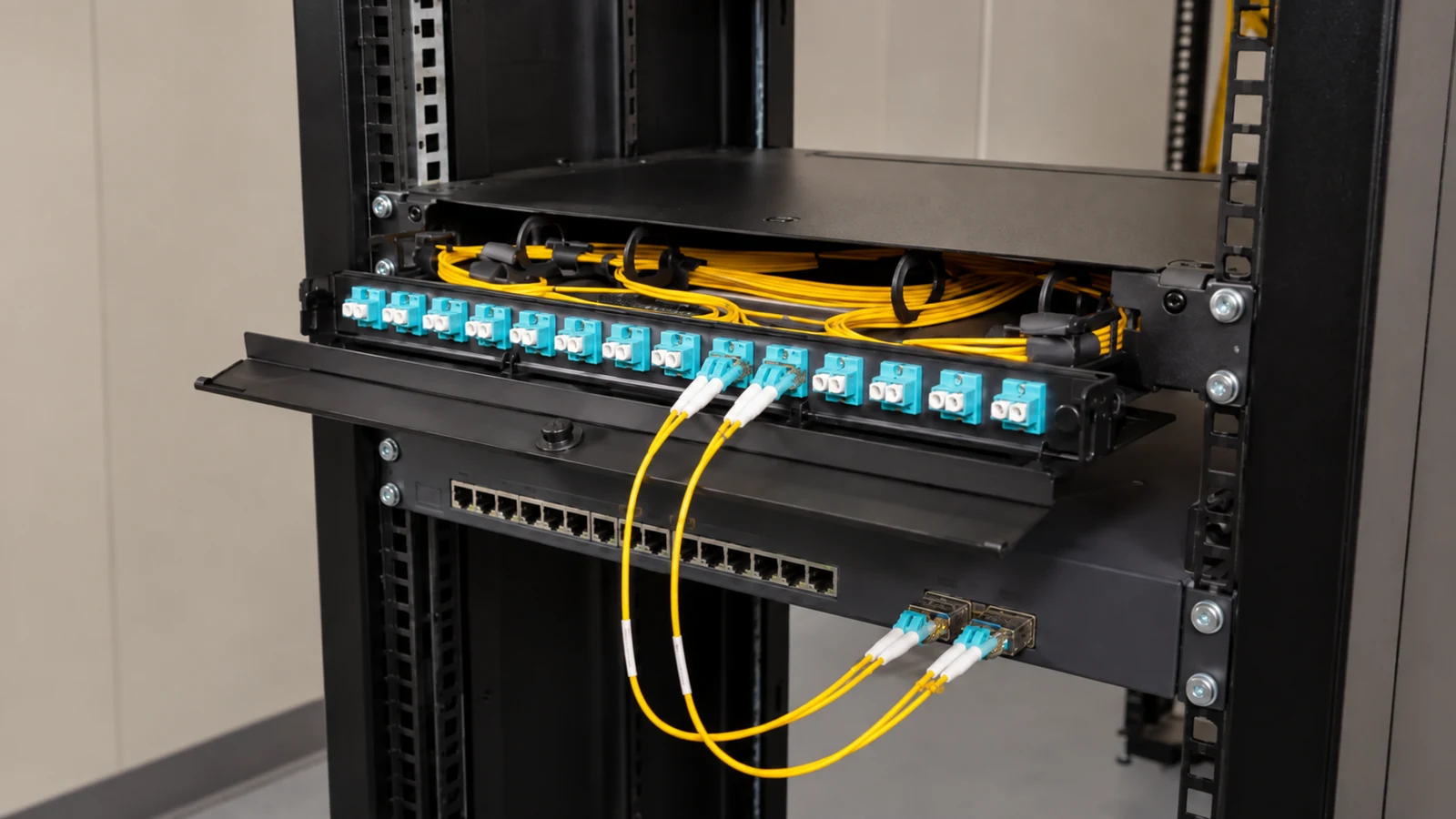
Create optical backbones for long runs, building links and high-capacity uplinks with documented testing.
PROPERTY APPLICATIONS
Separate new copper drops and pathways from the switching, wireless and endpoint configuration that follows.
Explore Tenant buildoutDetermine whether the constraint is cable reach, PoE, an uplink, recorder connectivity or a building-to-building path.
Explore Camera-system expansionDistinguish credentialed access from intercom communication and authorized release.
Explore Controlled visitor entranceStart with room use, sources, displays, audio and control rather than treating the project as a network-only upgrade.
Explore Conference-room refreshEvaluate fiber routes and network interfaces where copper distance or outdoor pathways are limiting.
Explore Multi-building propertyCreate an asset and service baseline before recurring failures become unplanned replacement projects.
Explore Aging system portfolioTECHNICAL PLANNING
Cable, patch panels and terminations are passive infrastructure; switches, PoE, VLANs and device connectivity are active network functions.
Horizontal copper, optical backbone and AV signal transport have different reach, pathway and interface requirements.
Document which party controls network, credentials, call routing, room control and customer accounts.
PoE, local supplies, UPS resources and controlled-opening hardware each create different dependencies.
Define cable test records, network validation, room functions, credential workflows, call/release behavior or optical loss evidence according to the solution.
Labels, topology, account ownership, asset history and as-built records should match the system being handed over.
PROJECT GUIDANCE
The solution families meet at defined boundaries: cabling terminates at active equipment, fiber connects network interfaces, access control can exchange door events with cameras, and intercom can request an authorized release. Each child solution should document and test only the interfaces it owns.
EAST ORLANDO CONTEXT
East Orlando properties range from established commercial spaces along Goldenrod and East Colonial to newer offices, managed sites and multi-building facilities toward Waterford Lakes, the UCF area and southeast corridors. The right solution follows the installed pathways, operating workflow and ownership boundaries at the property rather than a list of neighborhood keywords.
RELATED PATHS
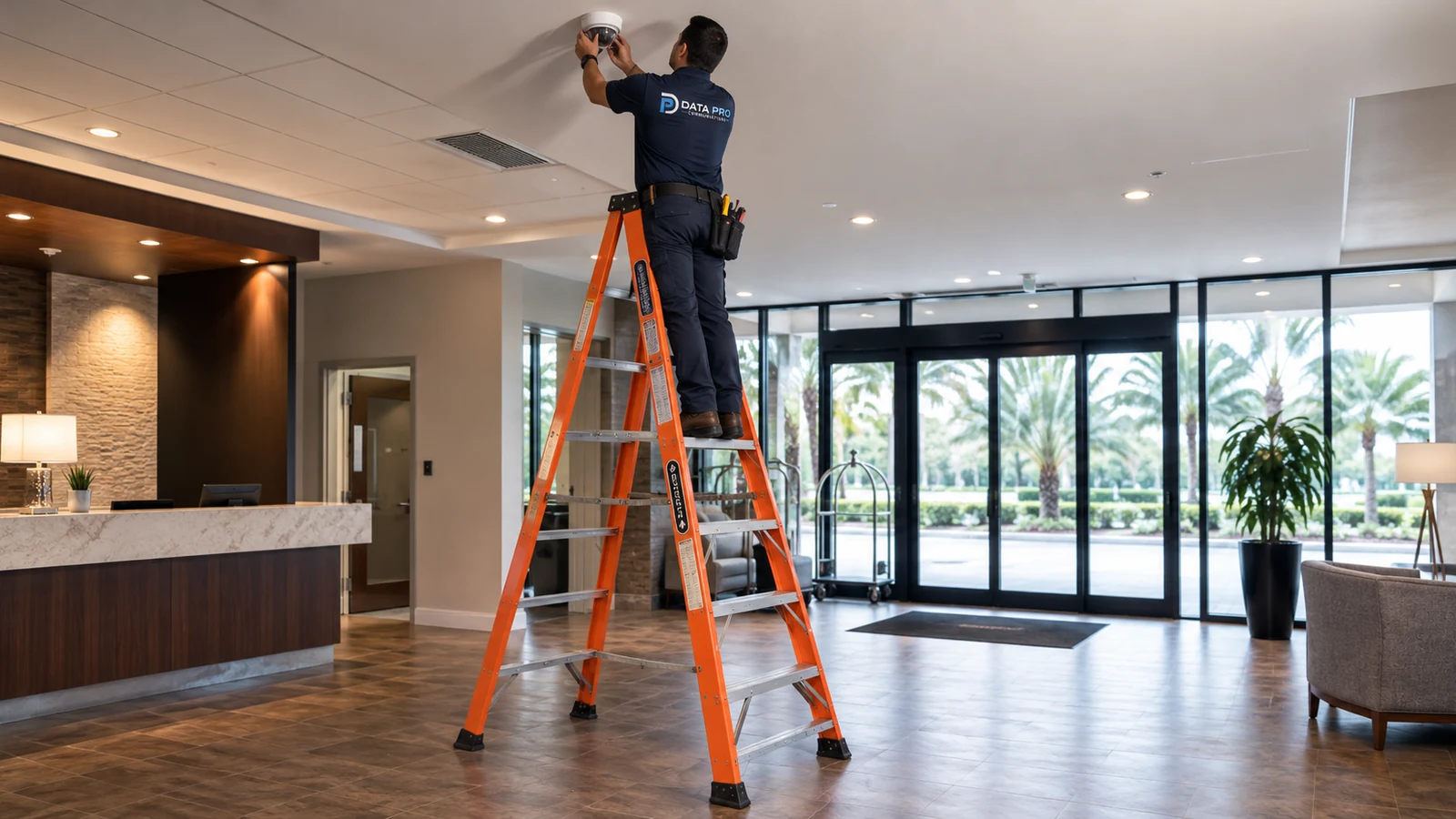
Camera pages define the surveillance outcome; supporting solutions supply the cabling, connectivity, entry and backbone dependencies.
View Camera Services
New camera installation may require a coordinated pathway, PoE or fiber scope.
View Security Cameras Installation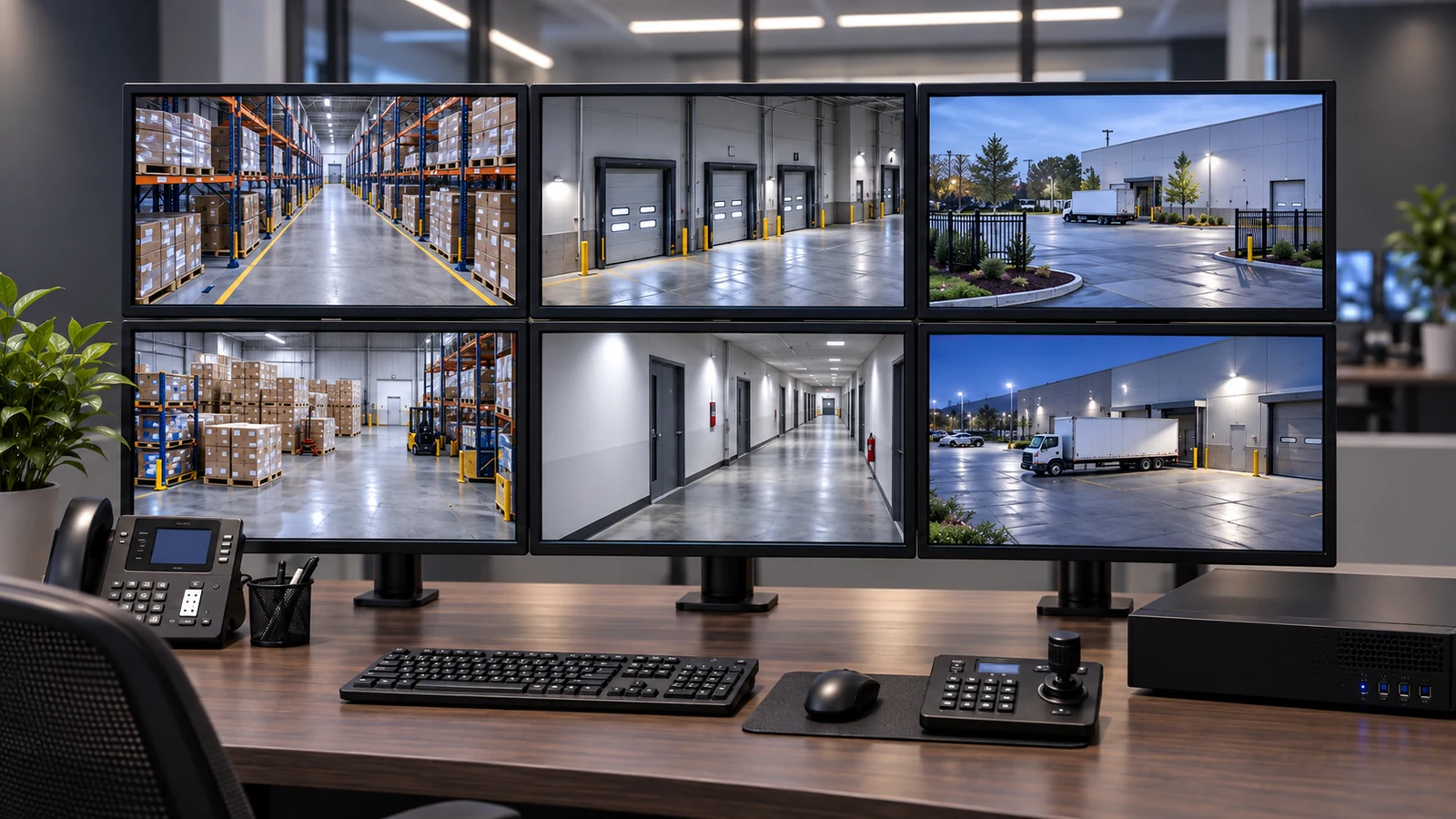
Recording and authorized access consume the network and backbone paths planned for the property.
View NVR & Remote ViewingRELATED PATHS
Use the Hub to separate passive infrastructure, active systems, entry workflows and lifecycle support.
Explore Operating Businesses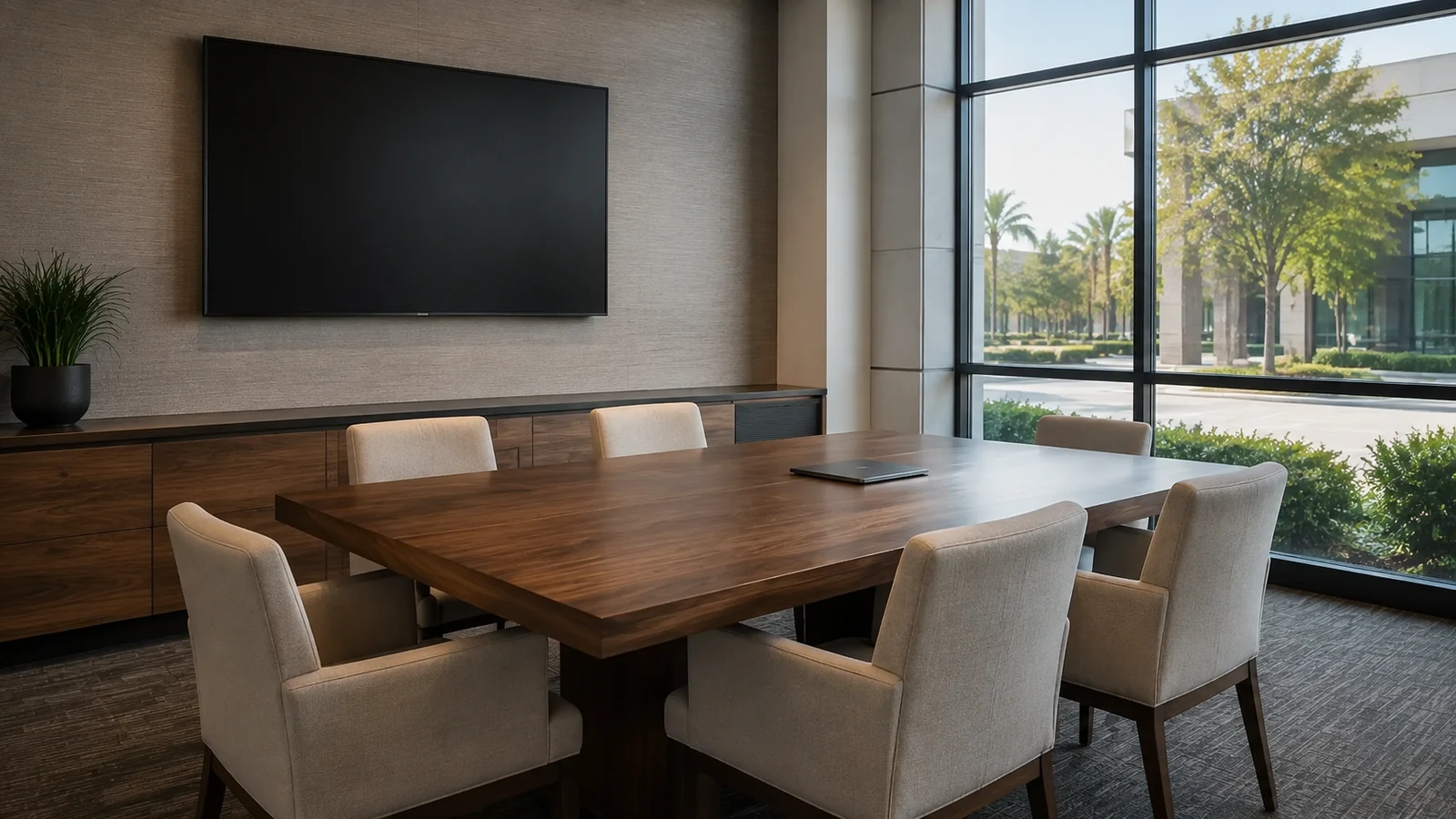
Route shared-area and multi-system needs to the child solution that owns the technical decision.
Explore Managed Properties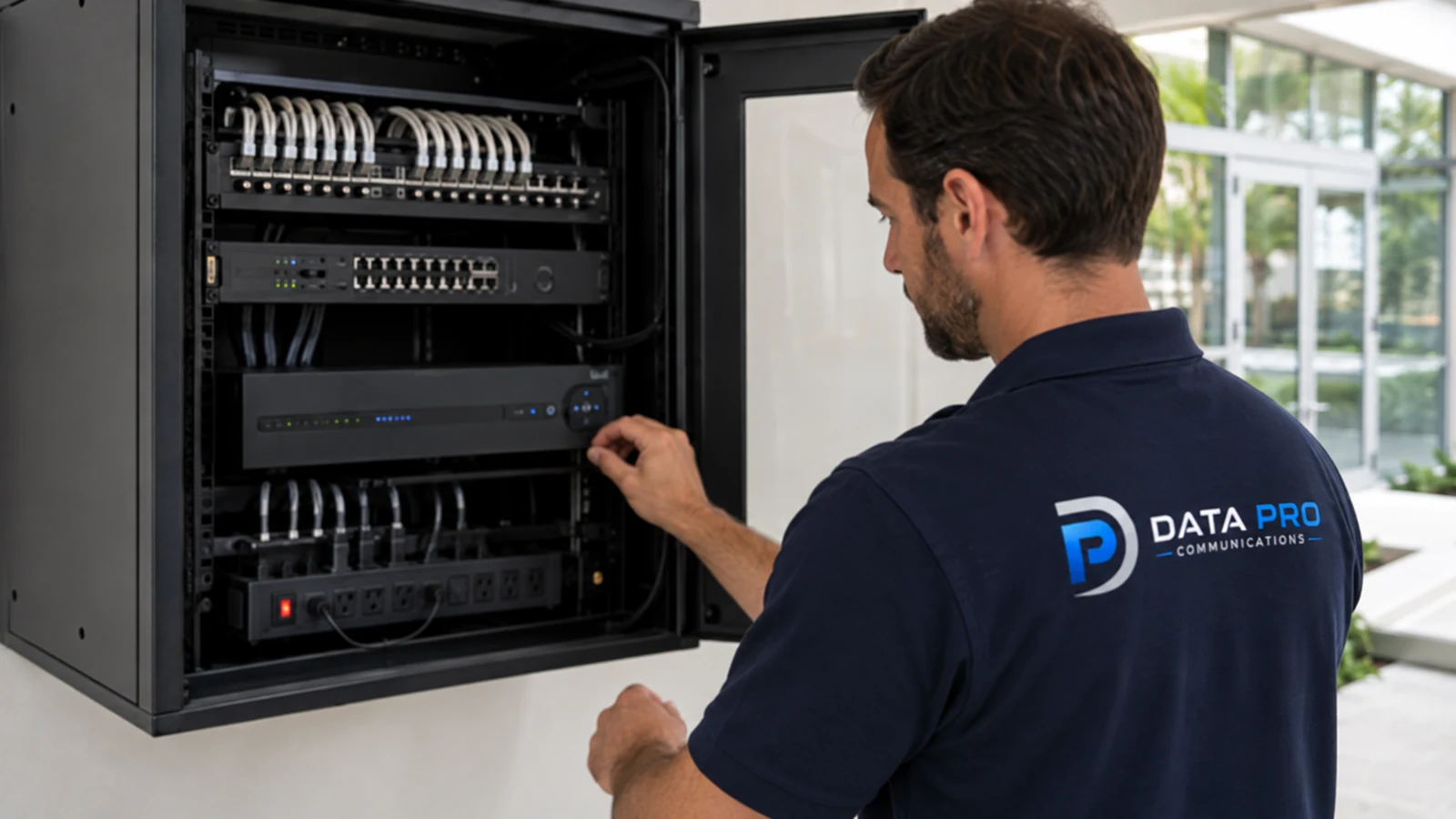
Identify which low-voltage disciplines require pathways, equipment space and testing before closeout.
Explore Construction PartnersPROJECT PROCESS
Describe the device, room, opening, building link or recurring support issue that needs a result.
Review pathways, racks, power, active equipment, accounts and system history that shape the decision.
Assign the work to cabling, network, AV, access, intercom, maintenance or fiber based on the controlling dependency.
Set the survey, design, testing and handoff evidence appropriate to the selected solution.
LICENSED SUPPORT
Data Pro Communications operates under FL License #EC13016138. From the East Orlando / Goldenrod branch, the team helps buyers identify whether passive copper, active network, AV, controlled entry, visitor communication, maintenance or optical backbone work owns the next decision.
FAQ
Begin with the endpoints and operating workflows, then separate passive cabling, active network, AV, controlled entry, visitor communication and any optical backbone needs. One coordinated project may contain several clearly owned scopes.
Cabling Services owns passive copper pathways, terminations, racks, patch panels, labels and cable testing. Network Solutions owns active switching, PoE, uplinks, VLANs, topology and connected-device configuration.
Fiber is considered when distance, building separation, pathway environment, aggregate capacity or electrical isolation makes an optical backbone more appropriate than a copper channel.
No. Access control manages credentials and controlled-opening logic. Intercom manages visitor communication, call routing and an authorized release request. Compatible systems may exchange events without becoming the same function.
Some commercial AV platforms use network transport or control, but bandwidth, segmentation, multicast behavior, addressing and administrative ownership should be reviewed for the selected system.
The survey should identify endpoints, rooms or openings, pathway conditions, equipment locations, power, distances, active interfaces, user workflows and the records needed at handoff.
Cabling provides physical paths, networks carry and power IP streams, fiber connects long links, access events can add door context, intercom supports visitor entry, and maintenance tracks the broader installed environment.
Possibly. Reuse depends on condition, test results, distance, capacity, compatibility, support status and whether the component meets the new operating requirement.
Authorized customer representatives should control administrative ownership and recovery information. User roles and vendor access should be documented according to the organization policy.
The handoff should match the solution: labels and test records for cabling, topology for networks, room functions for AV, opening and user records for access, call routes for intercom, service history for maintenance, or splice and loss records for fiber.
Describe the property decision, existing systems and the outcome that is blocked. A solution review can route the work to cabling, network, AV, access, intercom, maintenance or fiber without blurring their responsibilities.